
Why Your Seward Bungalow Smells Like Dirty Socks When the AC Kicks On
Walking into your Seward bungalow on a humid summer day and catching a whiff of something that smells like a forgotten gym locker is more than just unpleasant. That foul odor coming from your air conditioning vents is what HVAC technicians call Dirty Sock Syndrome. This isn’t just a weird smell—it’s a sign of microbial growth on your evaporator coil that affects thousands of Minneapolis homes every cooling season. Weak Airflow from Vents.
The odor typically hits you when your AC first kicks on after being off for a while. You might notice it’s strongest during those spring and fall transition periods when your system switches between heating and cooling modes. In older Seward homes with their characteristic low basements and compact mechanical rooms, this problem can be especially pronounced because moisture levels tend to stay higher in these enclosed spaces.. Read more about Can Your Calhoun Isles HVAC System Actually Handle a HEPA Filter Upgrade?.
What Causes That Dirty Sock Smell in Minneapolis Homes
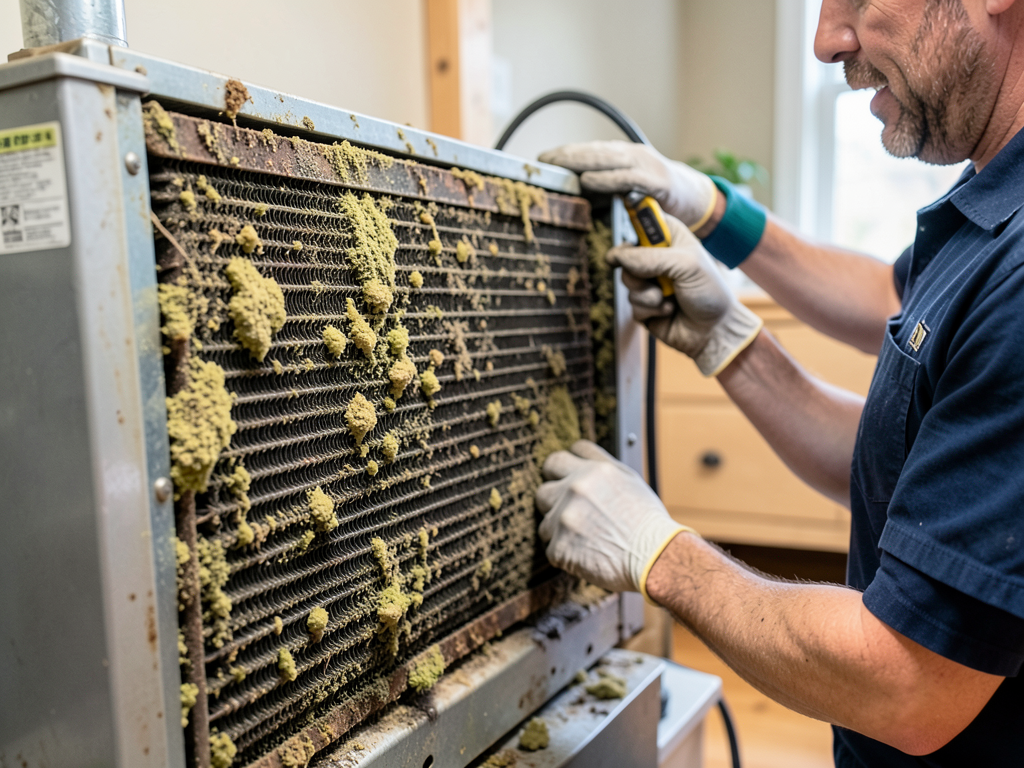
The culprit behind this odor is a combination of bacteria and mold that builds up on your evaporator coil. When warm, humid air passes over the cold coil, condensation forms. In Minneapolis’s climate, where summer humidity regularly hits 70-80%, this moisture creates the perfect breeding ground for microorganisms. Switching to a Cold Climate Heat Pump in Minnesota (Is It Worth It?).
Your Seward bungalow’s specific architecture plays a role too. Many of these early 1900s homes have original ductwork that’s not as airtight as modern systems. This allows more humid air to infiltrate, and the tighter envelope of renovated bungalows can trap moisture inside. The problem compounds when your condensate drain pan doesn’t slope properly or gets clogged with debris.. Read more about How Fresh Air Ventilation Systems (ERV and HRV) Help Tight Homes Breathe Better.
Is Dirty Sock Syndrome Dangerous for Your Family’s Health
While the smell itself is more annoying than harmful, the microbial growth producing it can affect indoor air quality. The bacteria and mold release volatile organic compounds (mVOCs) into your air. For Minneapolis families with allergies or respiratory conditions, these airborne particles can trigger symptoms like sneezing, coughing, or itchy eyes.
Children and elderly residents are particularly vulnerable. The Minnesota Department of Health notes that indoor air quality issues can be more problematic in tightly sealed homes common in neighborhoods like Seward, where many homeowners have upgraded insulation and windows for energy efficiency. This creates a trade-off: better energy performance but potentially worse air circulation. Minnesota Department of Health.
How to Identify if You Have Dirty Sock Syndrome
The smell is the most obvious indicator—it’s distinctly musty and often described as resembling dirty socks, locker rooms, or even a wet dog. But there are other signs specific to your Seward home. The odor typically appears within the first few minutes after your AC starts running and fades as the system continues operating.
You might notice the smell is worse when humidity spikes after summer rain, which happens frequently in Minneapolis. If you have a heat pump, you may detect the odor during the defrost cycle in winter. Another telltale sign: the smell often seems stronger near your air handler or in rooms closest to your mechanical equipment.
Professional Solutions for Minneapolis Homeowners
Cleaning your evaporator coil is the first step. Professional HVAC technicians use non-corrosive coil cleaners that kill the bacteria and mold without damaging the aluminum fins. In Seward bungalows, where space around the air handler is often limited, technicians may need to use specialized tools to access the coil properly.
For a more permanent solution, many Minneapolis homeowners are installing UV germicidal lights near the evaporator coil. These ultraviolet lamps continuously kill microorganisms before they can build up. The initial cost ranges from $400 to $800 installed, but they can eliminate the problem entirely in most cases.
Another option is antimicrobial coil coatings. These create a surface that prevents microbial adhesion. While more expensive upfront than cleaning alone, they provide longer-lasting protection—especially valuable in Minneapolis’s climate where humidity cycles are extreme.
DIY Steps to Reduce the Odor in Your Seward Home
Start with your air filter. Replace it with a high-quality MERV 11 or 13 filter. Cheap fiberglass filters allow too many particles through, while overly restrictive HEPA filters can reduce airflow and cause your system to freeze up. The sweet spot for most Minneapolis homes is MERV 11-13. EPA Indoor Air Quality.
Check your condensate drain line. You can flush it with a mixture of white vinegar and water to kill algae and bacteria. Pour one cup of the solution into the drain line access point near your air handler. This simple maintenance step, done every few months, can prevent many odor issues.
Run your AC periodically during the off-season. In Minneapolis, that means running it for 10-15 minutes every few weeks during spring and fall. This keeps air moving through the system and prevents stagnant water from sitting in the condensate pan.
Prevention Strategies for Minneapolis’s Climate
Minneapolis’s climate creates unique challenges. Our dramatic temperature swings mean your HVAC system cycles on and off frequently, creating condensation that evaporates and reforms repeatedly. This wet-dry cycle is exactly what microorganisms need to thrive.
Consider a whole-home dehumidifier if your Seward bungalow feels damp year-round. Units that integrate with your HVAC system can maintain optimal humidity levels between 40-60%, making it much harder for bacteria and mold to grow. Many Minneapolis homeowners find this investment pays for itself in both comfort and reduced maintenance issues.
Annual professional maintenance is crucial. A technician can check for proper condensate drainage, clean the drain pan, and inspect the coil for early signs of buildup. In older Seward homes, they can also verify that your ductwork isn’t contributing excess moisture to the problem.
Cost Comparison: Cleaning vs. Replacement
| Solution | Initial Cost | Duration | Best For |
|---|---|---|---|
| Professional Coil Cleaning | $150-300 | 6-18 months | Mild cases, budget-conscious |
| UV Light Installation | $400-800 | 2-3 years (bulb life) | Recurring problems |
| Antimicrobial Coating | $500-1,000 | 5+ years | Severe cases, long-term fix |
| Complete Coil Replacement | $1,200-2,500 | 10-15 years | Severe corrosion/damage |
When to Call a Professional HVAC Technician
If you’ve tried basic maintenance and the smell persists, it’s time for professional help. Signs you need a technician include visible mold on vents, the odor spreading throughout your entire home, or if you notice reduced cooling performance along with the smell.
In Seward bungalows, accessibility can be an issue. The tight mechanical spaces in these homes often require technicians with specific experience in older Minneapolis housing stock. They’ll know how to work in confined spaces without damaging original plaster or woodwork.
Professional cleaning involves more than just spraying cleaner on the coil. Technicians use specialized equipment to ensure complete coverage, check for proper drainage, and may recommend additional solutions based on your specific system configuration and home layout.
Special Considerations for Historic Seward Homes
Seward’s historic district contains many homes built before 1920, and their HVAC systems often reflect that age. Original ductwork may have asbestos insulation or be made from materials no longer up to code. When addressing Dirty Sock Syndrome in these homes, technicians must balance effective treatment with preservation concerns.
The Minneapolis Historic Preservation Commission has guidelines about modifications to these properties. Any HVAC work should maintain the home’s historical integrity while improving indoor air quality. This might mean using minimally invasive installation methods for UV lights or choosing cleaning products that won’t damage delicate materials.
Many Seward homeowners are also concerned about energy efficiency. Modern solutions like UV lights and high-efficiency filters can reduce your system’s energy consumption by keeping it cleaner and running more efficiently. This is especially important in Minnesota, where heating and cooling costs can be significant. How Much a New High Efficiency Furnace Really Costs in Minneapolis.
Frequently Asked Questions
Why does the smell only happen when my AC first turns on?
The odor is caused by microorganisms that have been growing on your coil during the off periods. When the system starts up, air blows across the contaminated coil, releasing the trapped odors. As the system runs, the continuous airflow and cooler temperatures reduce the smell’s intensity.
Can Dirty Sock Syndrome make my family sick?
While the smell itself isn’t toxic, the bacteria and mold producing it can affect air quality. People with allergies, asthma, or compromised immune systems may experience symptoms. The Minnesota Department of Health recommends addressing persistent indoor air quality issues, especially in homes with vulnerable residents.
How often should I have my evaporator coil cleaned?
For Minneapolis homes, annual professional cleaning is recommended, preferably before cooling season begins. If you have pets, live near construction, or notice the smell returning quickly after cleaning, you might need service every 6-9 months. Homes in the Seward area often benefit from more frequent maintenance due to our climate. Fast AC Service for North Loop Condos and Lofts.
Will a higher MERV filter solve the problem?
A better filter helps but won’t eliminate Dirty Sock Syndrome. While MERV 11-13 filters catch more particles that feed microbial growth, the bacteria and mold already on your coil continue to produce odors. Filters are part of the solution but not a complete fix.
Take Action Against That Foul AC Odor
That dirty sock smell isn’t just annoying—it’s your HVAC system telling you something needs attention. In Seward’s climate, where humidity and temperature swings create perfect conditions for microbial growth, this problem won’t fix itself.
Don’t let another cooling season pass with that unpleasant odor circulating through your home. Call (651) 588-9677 today to schedule a professional inspection. Our technicians understand the unique challenges of Minneapolis homes and can recommend the right solution for your specific situation.
Pick up the phone and call (651) 588-9677 before the next heat wave hits. Your family deserves fresh, clean air without that musty smell every time the AC kicks on.
Ready to breathe easier? Call (651) 588-9677 now to book your appointment and say goodbye to Dirty Sock Syndrome for good.
You may also find this helpful. Why New Energy Efficient Windows Might Make Your Armatage Home Feel Stuffy.
{
“@context”: “https://schema.org”,
“@type”: “BlogPosting”,
“headline”: “Why Your Seward Bungalow Smells Like Dirty Socks When the AC Kicks On”,
“description”: “That foul odor from your AC in your Seward bungalow isn’t just annoying—it’s Dirty Sock Syndrome. Learn what causes it, why it’s common in Minneapolis homes, and how to fix it.”,
“wordCount”: 1648,
“datePublished”: “2026-04-29T10:54:00.000Z”,
“dateModified”: “2026-04-29T10:54:00.000Z”,
“inLanguage”: “en-US”,
“mainEntityOfPage”: {
“@type”: “WebPage”,
“@id”: “https://allprohvacminneapolis.com”
},
“publisher”: {
“@type”: “LocalBusiness”,
“name”: “All Pro HVAC Minneapolis”,
“url”: “https://allprohvacminneapolis.com”
},
“author”: {
“@type”: “Organization”,
“name”: “All Pro HVAC Minneapolis”,
“url”: “https://allprohvacminneapolis.com”
},
“image”: {
“@type”: “ImageObject”,
“url”: “https://allprohvacminneapolis.com/wp-content/uploads/2026/03/why-your-seward-bungalow-smells-like-dirty-socks-w-1.png”
}
}
{
“@context”: “https://schema.org”,
“@type”: “HVACBusiness”,
“name”: “All Pro HVAC Minneapolis”,
“url”: “https://allprohvacminneapolis.com”,
“address”: {
“@type”: “PostalAddress”,
“addressLocality”: “Minneapolis”
},
“areaServed”: {
“@type”: “City”,
“name”: “Minneapolis”
}
}
{
“@context”: “https://schema.org”,
“@type”: “FAQPage”,
“mainEntity”: [
{
“@type”: “Question”,
“name”: “Why does the smell only happen when my AC first turns on?”,
“acceptedAnswer”: {
“@type”: “Answer”,
“text”: “The odor is caused by microorganisms that have been growing on your coil during the off periods. When the system starts up, air blows across the contaminated coil, releasing the trapped odors. As the system runs, the continuous airflow and cooler temperatures reduce the smell’s intensity.”
}
},
{
“@type”: “Question”,
“name”: “Can Dirty Sock Syndrome make my family sick?”,
“acceptedAnswer”: {
“@type”: “Answer”,
“text”: “While the smell itself isn’t toxic, the bacteria and mold producing it can affect air quality. People with allergies, asthma, or compromised immune systems may experience symptoms. The Minnesota Department of Health recommends addressing persistent indoor air quality issues, especially in homes with vulnerable residents.”
}
},
{
“@type”: “Question”,
“name”: “How often should I have my evaporator coil cleaned?”,
“acceptedAnswer”: {
“@type”: “Answer”,
“text”: “For Minneapolis homes, annual professional cleaning is recommended, preferably before cooling season begins. If you have pets, live near construction, or notice the smell returning quickly after cleaning, you might need service every 6-9 months. Homes in the Seward area often benefit from more frequent maintenance due to our climate. Fast AC Service for North Loop Condos and Lofts.”
}
},
{
“@type”: “Question”,
“name”: “Will a higher MERV filter solve the problem?”,
“acceptedAnswer”: {
“@type”: “Answer”,
“text”: “A better filter helps but won’t eliminate Dirty Sock Syndrome. While MERV 11-13 filters catch more particles that feed microbial growth, the bacteria and mold already on your coil continue to produce odors. Filters are part of the solution but not a complete fix.”
}
}
]
}
{
“@context”: “https://schema.org”,
“@type”: “BreadcrumbList”,
“itemListElement”: [
{
“@type”: “ListItem”,
“position”: 1,
“name”: “Home”,
“item”: “https://allprohvacminneapolis.com”
},
{
“@type”: “ListItem”,
“position”: 2,
“name”: “Blog”,
“item”: “https://allprohvacminneapolis.com/blog”
},
{
“@type”: “ListItem”,
“position”: 3,
“name”: “Why Your Seward Bungalow Smells Like Dirty Socks When the AC Kicks On”
}
]
}
{
“@context”: “https://schema.org”,
“@type”: “Service”,
“serviceType”: “HVAC”,
“provider”: {
“@type”: “LocalBusiness”,
“name”: “All Pro HVAC Minneapolis”,
“url”: “https://allprohvacminneapolis.com”
},
“areaServed”: {
“@type”: “City”,
“name”: “Minneapolis”
},
“description”: “That foul odor from your AC in your Seward bungalow isn’t just annoying—it’s Dirty Sock Syndrome. Learn what causes it, why it’s common in Minneapolis homes, and how to fix it.”
}