
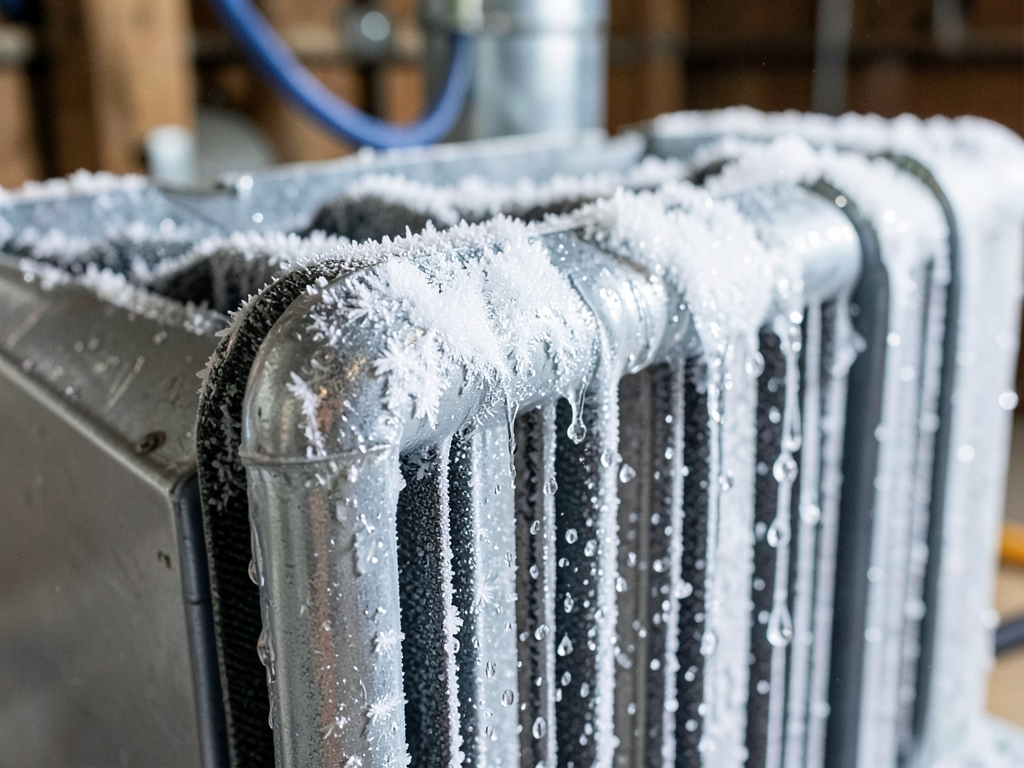
Why Your AC Coils Are Frozen Even When It Is 90 Degrees in Hiawatha
Seeing frost on your AC coils while the thermometer reads 90 degrees outside feels backwards. You are not alone. This happens often in Hiawatha during peak summer when high humidity and restricted airflow combine to create the perfect freeze-up conditions. Your AC is still trying to cool your home but something is preventing heat from transferring properly. The result is ice forming on the evaporator coil even as outdoor temperatures soar. Weak Airflow from Vents.
Turn off your AC immediately. Running a frozen system risks compressor damage that can cost thousands to repair. Let the ice melt completely before attempting any troubleshooting. This article explains why this happens in Minneapolis homes and what to do next. EPA Section 608.
Immediate Action: Why You Must Turn Off Your AC Right Now
A frozen coil blocks airflow and strains the compressor. If the compressor overheats while trying to push refrigerant through ice it can fail. That means a complete system replacement instead of a simple repair. Shut down the system at the thermostat. Switch the fan to “on” mode to circulate air over the coil and speed thawing. Expect the process to take anywhere from two to twenty-four hours depending on ice thickness. Finding an AC Repair Team in Edina That Actually Shows Up on Time.
Place towels around the indoor unit to catch melting water. If your furnace sits in a basement check the floor drain for clogs. A backed-up drain can flood your basement while the ice melts. How Much a New High Efficiency Furnace Really Costs in Minneapolis.
The Thawing Process: How to Safely Defrost Your Evaporator Coil
Never chip away ice with a tool. Sharp objects can puncture the fragile coil fins and create refrigerant leaks. Instead follow these steps:
- Turn Off Cooling
Set thermostat to “off” and fan to “on.”
- Clear the Area
Move furniture and valuables away from the indoor unit.
- Protect Flooring
Lay absorbent towels or a shallow pan under the coil.
- Wait for Melt
Allow 2-24 hours for ice to disappear completely.
- Check Drain Line
Pour a cup of water into the condensate drain to confirm flow.
- Test System
After thawing restore cooling and monitor for ice return.
If ice reappears within hours you have an underlying issue that needs professional diagnosis.
Top 5 Causes of Frozen Coils in Minneapolis Homes
Understanding the root cause prevents repeat freeze-ups. Here are the most common culprits in Hiawatha and surrounding neighborhoods.
1. Dirty Air Filter Blocking Airflow
A clogged filter reduces air moving across the coil. Less heat transfer means the coil temperature drops below freezing and moisture in the air freezes on contact. Minneapolis homeowners running MERV 13 filters for allergy control may need to change them every thirty days during summer. A visual check takes seconds: hold the filter to a light. If you cannot see light through it replace it.
2. Blocked or Closed Supply Vents
Closing vents in unused rooms seems like a smart way to save energy but it reduces total system airflow. In homes near Minnehaha Parkway where room layouts vary widely blocked vents can create cold spots that trigger icing. Keep at least seventy-five percent of vents open. Make sure furniture or rugs are not obstructing return grilles.
3. Low Refrigerant Charge
Refrigerant does not deplete over time unless there is a leak. Small leaks often develop at flare fittings or in the coil itself. When charge drops the system cannot absorb enough heat and the coil temperature plummets. This is the most common cause of persistent freeze-ups in Minneapolis due to the long cooling season and high humidity. Only a licensed technician can test and recharge to EPA Section 608 standards.
4. Failed Blower Motor or Dirty Blower Wheel
The blower motor moves air across the coil. If it runs slow due to age or debris buildup airflow drops. In older South Minneapolis bungalows with original ductwork this is a frequent issue. A failing motor may hum or vibrate before stopping. If you hear unusual sounds call a technician before the coil freezes.
5. Malfunctioning Thermostatic Expansion Valve
The TXV regulates refrigerant flow into the coil. If it sticks closed too much refrigerant enters and the coil supercools. This is more common in newer high-efficiency units found in recent Hiawatha remodels. A stuck TXV requires replacement and refrigerant recovery under EPA guidelines.
The Minneapolis Factor: How MN Humidity Contributes to Coil Icing
Minneapolis averages nearly fourteen inches of rain during summer months. High dew points mean more moisture in the air. When that moisture hits a supercooled coil it freezes instantly. Combine that with the urban heat island effect around Lake Street and Hiawatha Avenue and you get wide temperature swings inside homes. A two-story house near Minnehaha Creek might be seventy degrees downstairs and sixty degrees upstairs. That temperature differential increases the chance of localized coil freezing.
Older homes with original ductwork often have design flaws that modern systems expose. Undersized return ducts cannot handle the higher airflow of today’s efficient units. The result is low coil temperature and ice formation even when the thermostat reads the correct setpoint.
DIY vs. Professional Repair: When to Call a Technician
You can handle basic steps like changing filters and clearing vents yourself. Anything involving refrigerant, electrical components, or the sealed system requires a professional. Signs you need expert help:
- Ice returns within hours of thawing
- You hear hissing or bubbling sounds from the indoor unit
- The system short cycles on and off rapidly
- You notice oil stains around refrigerant line connections
Professional diagnosis includes measuring superheat and subcooling, testing capacitor health, and checking for duct leaks. In Minneapolis where heating and cooling loads are extreme skipping these checks risks system failure during the next heat wave.
Preventative Maintenance: The Role of Annual AC Tune-Ups
Annual maintenance can catch small issues before they cause a freeze-up. A typical tune-up includes coil cleaning, refrigerant level check, electrical connection tightening, and condensate drain flushing. In Minneapolis where systems run hard for five months straight this service pays for itself by preventing mid-season breakdowns. Fast AC Service for North Loop Condos and Lofts.
Homeowners near Hiawatha School often schedule tune-ups in early May before summer heat arrives. Technicians can also check for proper ductwork sizing and recommend upgrades if airflow remains marginal.
Frequently Asked Questions
Can I pour hot water on the coil to speed thawing?
Hot water can crack the coil due to rapid temperature change. Use room temperature water if you want to accelerate the process but do not exceed 90 degrees Fahrenheit.
How much does refrigerant recharge cost in Minneapolis?
Most residential AC systems use R-410A. A standard recharge plus leak check ranges from $250 to $600 depending on system size and labor time. R-22 recharge is far more expensive and rarely worth it on older units.
Will a frozen coil damage my furnace?
The indoor coil sits above the furnace. If water overflows due to a clogged drain it can rust furnace components. Turn off both heating and cooling at the breaker during thawing to avoid accidental furnace activation.
How long should I wait before turning the AC back on?
Wait until all visible ice is gone and the drain line flows freely. This usually takes at least two hours but can extend to a full day for severe ice buildup.
Is this covered by home warranty?
Most warranties cover repair of failed components but not preventive maintenance. Check your contract for refrigerant and coil coverage limits.
Cost of Ignoring the Issue: Compressor Replacement vs. Service Call
A standard service call in Minneapolis costs $75 to $125. A compressor replacement ranges from $1,800 to $2,500 including parts and labor. If the compressor fails you also pay for refrigerant recovery and recharge. That makes a $125 diagnostic fee look very reasonable.
Beyond cost there is comfort. A frozen coil means zero cooling capacity. In July heat that can push indoor temperatures into the upper eighties within hours. For families with infants, elderly members, or medical conditions this is more than an inconvenience.
Local Emergency AC Repair in Hiawatha and Minneapolis
When your AC freezes on a 90-degree day you need help fast. Our technicians carry common parts like blower motors, capacitors, and refrigerant gauges on every truck. We serve Hiawatha, Minnehaha, and all Minneapolis neighborhoods with 24/7 emergency response. Call (651) 588-9677 for same-day service.
We understand the urgency. Our dispatch team can often provide a two-hour window so you are not waiting all day. We also coordinate with Xcel Energy rebate programs for high-efficiency repairs when applicable. Xcel Energy rebate programs.
Call (651) 588-9677 Today to Schedule Your Inspection
Ice on your coils is a warning sign not a minor annoyance. Whether you need a quick diagnosis or a full system evaluation we are ready to help. Call (651) 588-9677 before the next heat wave hits. Your comfort and your system depend on it.
Disclaimer: Always turn off your AC if you notice ice formation. Running a frozen system risks expensive damage. This article provides general guidance and is not a substitute for professional HVAC service.
{
“@context”: “https://schema.org”,
“@type”: “BlogPosting”,
“headline”: “Why Your AC Coils Are Frozen Even When It Is 90 Degrees in Hiawatha”,
“description”: “Frozen AC coils in 90-degree heat? Discover the hidden causes, emergency thawing steps, and why Minneapolis humidity makes this a common summer problem in Hiawatha.”,
“wordCount”: 1537,
“datePublished”: “2026-04-25T13:25:00.000Z”,
“dateModified”: “2026-04-25T13:25:00.000Z”,
“inLanguage”: “en-US”,
“mainEntityOfPage”: {
“@type”: “WebPage”,
“@id”: “https://allprohvacminneapolis.com”
},
“publisher”: {
“@type”: “LocalBusiness”,
“name”: “All Pro HVAC Minneapolis”,
“url”: “https://allprohvacminneapolis.com”
},
“author”: {
“@type”: “Organization”,
“name”: “All Pro HVAC Minneapolis”,
“url”: “https://allprohvacminneapolis.com”
},
“image”: {
“@type”: “ImageObject”,
“url”: “https://allprohvacminneapolis.com/wp-content/uploads/2026/03/why-your-ac-coils-are-frozen-even-when-it-is-90-de-1.png”
}
}
{
“@context”: “https://schema.org”,
“@type”: “HVACBusiness”,
“name”: “All Pro HVAC Minneapolis”,
“url”: “https://allprohvacminneapolis.com”,
“address”: {
“@type”: “PostalAddress”,
“addressLocality”: “Minneapolis”
},
“areaServed”: {
“@type”: “City”,
“name”: “Minneapolis”
}
}
{
“@context”: “https://schema.org”,
“@type”: “FAQPage”,
“mainEntity”: [
{
“@type”: “Question”,
“name”: “Can I pour hot water on the coil to speed thawing?”,
“acceptedAnswer”: {
“@type”: “Answer”,
“text”: “Hot water can crack the coil due to rapid temperature change. Use room temperature water if you want to accelerate the process but do not exceed 90 degrees Fahrenheit.”
}
},
{
“@type”: “Question”,
“name”: “How much does refrigerant recharge cost in Minneapolis?”,
“acceptedAnswer”: {
“@type”: “Answer”,
“text”: “Most residential AC systems use R-410A. A standard recharge plus leak check ranges from $250 to $600 depending on system size and labor time. R-22 recharge is far more expensive and rarely worth it on older units.”
}
},
{
“@type”: “Question”,
“name”: “Will a frozen coil damage my furnace?”,
“acceptedAnswer”: {
“@type”: “Answer”,
“text”: “The indoor coil sits above the furnace. If water overflows due to a clogged drain it can rust furnace components. Turn off both heating and cooling at the breaker during thawing to avoid accidental furnace activation.”
}
},
{
“@type”: “Question”,
“name”: “How long should I wait before turning the AC back on?”,
“acceptedAnswer”: {
“@type”: “Answer”,
“text”: “Wait until all visible ice is gone and the drain line flows freely. This usually takes at least two hours but can extend to a full day for severe ice buildup.”
}
},
{
“@type”: “Question”,
“name”: “Is this covered by home warranty?”,
“acceptedAnswer”: {
“@type”: “Answer”,
“text”: “Most warranties cover repair of failed components but not preventive maintenance. Check your contract for refrigerant and coil coverage limits.”
}
}
]
}
{
“@context”: “https://schema.org”,
“@type”: “HowTo”,
“name”: “How to Thaw a Frozen AC Coil”,
“step”: [
{
“@type”: “HowToStep”,
“position”: 1,
“name”: “Turn Off Cooling”,
“text”: “Set thermostat to \”off\” and fan to \”on.\””
},
{
“@type”: “HowToStep”,
“position”: 2,
“name”: “Clear the Area”,
“text”: “Move furniture and valuables away from the indoor unit.”
},
{
“@type”: “HowToStep”,
“position”: 3,
“name”: “Protect Flooring”,
“text”: “Lay absorbent towels or a shallow pan under the coil.”
},
{
“@type”: “HowToStep”,
“position”: 4,
“name”: “Wait for Melt”,
“text”: “Allow 2-24 hours for ice to disappear completely.”
},
{
“@type”: “HowToStep”,
“position”: 5,
“name”: “Check Drain Line”,
“text”: “Pour a cup of water into the condensate drain to confirm flow.”
},
{
“@type”: “HowToStep”,
“position”: 6,
“name”: “Test System”,
“text”: “After thawing restore cooling and monitor for ice return.”
}
],
“image”: “https://allprohvacminneapolis.com/wp-content/uploads/2026/03/why-your-ac-coils-are-frozen-even-when-it-is-90-de-1.png”
}
{
“@context”: “https://schema.org”,
“@type”: “BreadcrumbList”,
“itemListElement”: [
{
“@type”: “ListItem”,
“position”: 1,
“name”: “Home”,
“item”: “https://allprohvacminneapolis.com”
},
{
“@type”: “ListItem”,
“position”: 2,
“name”: “Blog”,
“item”: “https://allprohvacminneapolis.com/blog”
},
{
“@type”: “ListItem”,
“position”: 3,
“name”: “Why Your AC Coils Are Frozen Even When It Is 90 Degrees in Hiawatha”
}
]
}
{
“@context”: “https://schema.org”,
“@type”: “Service”,
“serviceType”: “HVAC”,
“provider”: {
“@type”: “LocalBusiness”,
“name”: “All Pro HVAC Minneapolis”,
“url”: “https://allprohvacminneapolis.com”
},
“areaServed”: {
“@type”: “City”,
“name”: “Minneapolis”
},
“description”: “Frozen AC coils in 90-degree heat? Discover the hidden causes, emergency thawing steps, and why Minneapolis humidity makes this a common summer problem in Hiawatha.”
}