
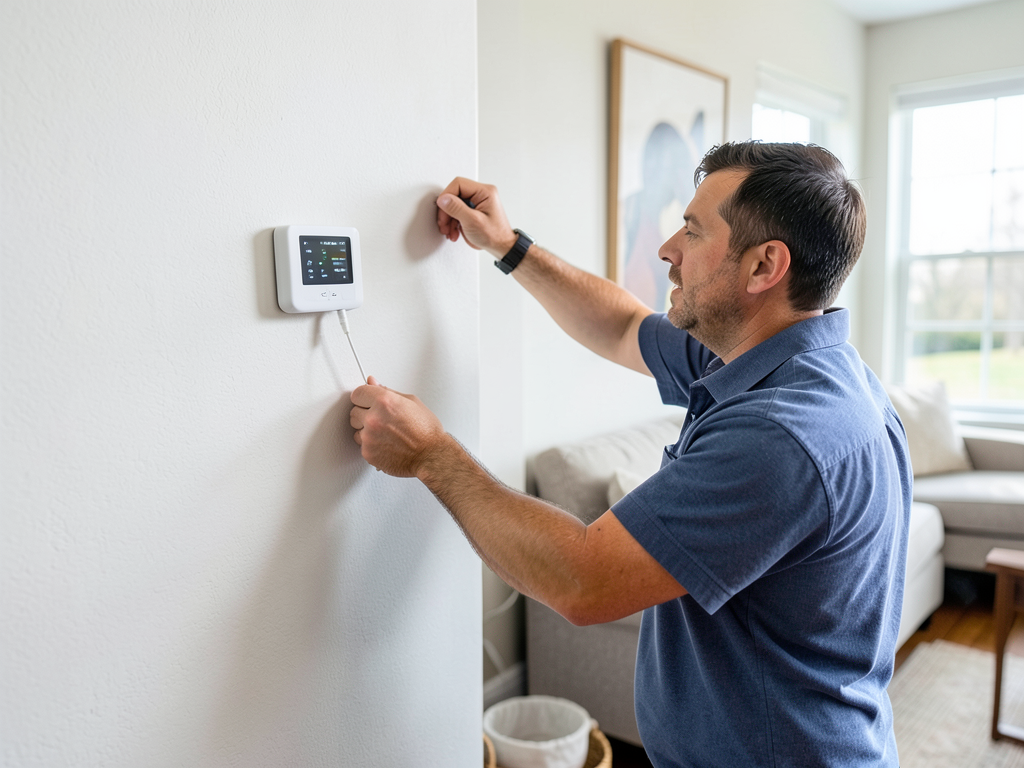
Why Putting Your Thermostat in the Wrong Spot is Ruining Your Comfort in St. Anthony
Bad thermostat placement wastes energy and creates uncomfortable hot and cold spots in your St. Anthony home. A thermostat placed near a window, in direct sunlight, or next to a kitchen stove reads incorrect temperatures and causes your HVAC system to cycle improperly. This leads to higher utility bills and rooms that never feel quite right.. Read more about The Best Ways to Balance Temperatures in an Elliot Park Multi Story Condo.
Most St. Anthony homes built before 2000 have thermostats in less-than-ideal locations. Builders often placed them for convenience rather than performance. The result is a system that runs too much or too little based on misleading temperature readings.
The good news is that moving a thermostat is a straightforward process that can dramatically improve your home’s comfort and efficiency. A properly placed thermostat can reduce your heating and cooling costs by up to 15% annually while eliminating those frustrating temperature swings between rooms. How Much a New High Efficiency Furnace Really Costs in Minneapolis.
Common Thermostat Placement Mistakes in St. Anthony Homes
St. Anthony’s mix of mid-century ramblers and newer constructions each have unique placement challenges. Many homes suffer from the same fundamental errors that cause temperature readings to be way off from the actual comfort level in your living spaces.
Kitchens are a prime example of bad placement. The heat from your stove, oven, and even refrigerator creates a warm zone that tricks your thermostat into thinking the whole house is hotter than it really is. Your system shuts off prematurely while bedrooms and living rooms remain cold.
Windows and exterior walls are equally problematic. St. Anthony experiences temperature swings from -20°F in winter to over 90°F in summer. A thermostat on an exterior wall or near a window reads these extreme temperatures and causes your system to overwork trying to compensate.
Hallways often seem like logical spots but they create their own problems. These areas typically have poor air circulation and don’t represent the temperature of your main living spaces. Your thermostat might read 70°F in a stagnant hallway while your family room sits at a chilly 64°F.
Supply vents are another common mistake. The cold air blowing directly on your thermostat makes it think your home is cooler than it actually is. This causes your heating system to run longer than necessary, wasting energy and creating uncomfortable temperature swings. Weak Airflow from Vents.
Ideal Thermostat Placement for St. Anthony’s Climate
The perfect thermostat location balances several factors specific to St. Anthony’s climate and home designs. Interior walls in central locations work best because they avoid the temperature extremes found on exterior walls. Switching to a Cold Climate Heat Pump in Minnesota (Is It Worth It?).
Height matters more than many homeowners realize. The optimal mounting height is between 52 and 60 inches from the floor. This range captures the average air temperature where people actually live and breathe, not the cooler air near the floor or the warmer air that rises to the ceiling.
Living rooms and family rooms make excellent locations when they’re centrally positioned in your home. These spaces typically have good air circulation and represent where your family spends most of their time. Just ensure the thermostat isn’t mounted above a television or near electronics that generate heat.
For multi-level St. Anthony homes, you might need more than one thermostat. Heat rises, so upper floors often need independent temperature control. Smart thermostats with remote sensors can solve this problem without the expense of multiple control units.
Avoid placing thermostats near doors that open frequently to the outdoors. Each time someone enters or leaves, a blast of cold or hot air hits the thermostat and causes unnecessary system cycling. This is especially problematic in St. Anthony’s busy households during winter months.
How Bad Placement Affects Your Energy Bills
A thermostat in the wrong spot can increase your annual energy costs by 10-20%. When your system runs based on incorrect temperature readings, it operates inefficiently and wastes both energy and money.
Direct sunlight exposure is one of the most common and costly mistakes. A thermostat that sits in afternoon sun might read 75°F when the actual room temperature is 68°F. Your air conditioner runs constantly trying to cool a house that’s already comfortable, running up your summer electric bills.
Near-kitchen placement causes the opposite problem in winter. The heat from cooking makes your thermostat think your home is warmer than it is. Your furnace doesn’t run enough, leaving other rooms uncomfortably cold while you pay to heat the kitchen area repeatedly throughout the day.
Drafty areas near windows or exterior doors create another costly scenario. Cold drafts make your heating system run longer than necessary, while warm summer breezes trick your air conditioner into short-cycling. Both patterns waste energy and reduce system lifespan.
The cumulative effect of these issues can add hundreds of dollars to your annual utility costs. A properly placed thermostat typically pays for itself in energy savings within one heating season in St. Anthony’s climate.
Smart Thermostat Considerations for Modern Homes
Smart thermostats offer solutions for difficult placement situations, but they come with their own requirements. Wi-Fi signal strength is crucial for smart thermostat operation. A thermostat too far from your router or behind too many walls may lose connection and default to basic operation.
Most smart thermostats need a common wire (C-wire) for continuous power. Older St. Anthony homes often lack this wiring, requiring an upgrade during installation. Without a C-wire, your smart thermostat may experience power issues or fail to maintain its smart features.
Remote sensors can solve many placement problems. These small devices communicate with your main thermostat and provide temperature readings from different rooms. You can place sensors in bedrooms, living rooms, or any area where you want precise temperature control.
Learning algorithms in smart thermostats can compensate somewhat for less-than-ideal placement. They track patterns and adjust operation based on your schedule and preferences. However, they work best when starting with a good physical location.
Voice control and smartphone apps add convenience but don’t address the fundamental issue of bad placement. A smart thermostat in a poor location still provides inaccurate readings, just with more sophisticated error correction.
Professional Installation vs. DIY Moving
Moving a thermostat involves more than just unscrewing it from the wall. Proper wiring, wall repair, and system calibration require professional expertise. DIY attempts often result in exposed wires, uneven mounting, or system malfunctions. EPA Energy Star thermostat information.
Professional installation includes testing your HVAC system after relocation. Technicians verify that your furnace and air conditioner communicate correctly with the new thermostat location. They also check for any needed wiring upgrades or voltage issues.
Wall repair is another consideration many homeowners overlook. Moving a thermostat leaves an unpainted hole that needs patching and matching to your existing wall texture. Professional installers handle this seamlessly as part of the service. Finding an AC Repair Team in Edina That Actually Shows Up on Time.
System programming adjustments ensure your HVAC equipment runs efficiently with the new thermostat location. Different placements may require modified temperature differentials or cycle times to maintain comfort without excessive energy use.
Permits and code compliance matter for thermostat relocation in St. Anthony. Licensed HVAC contractors know local requirements and ensure your installation meets all safety standards. This protects you from potential issues if you sell your home in the future.
Thermostat Placement for Different Home Styles
St. Anthony’s diverse housing stock requires different approaches to thermostat placement. Mid-century ramblers often have open floor plans that make central placement easier, while split-level homes present unique challenges.
Ramblers benefit from hallway placement only when the hallway is centrally located and away from exterior walls. The open nature of these homes allows good air circulation, but avoid placing thermostats near kitchen entrances where cooking heat can interfere.
Split-level homes frequently need multiple thermostats or remote sensors. Heat naturally rises to upper levels, creating temperature differences of 5-8 degrees between floors. Independent control for each level provides balanced comfort throughout your home.
Newer constructions in St. Anthony often have dedicated mechanical rooms where thermostats can be placed away from living areas. These locations protect the thermostat from temperature influences while keeping it accessible for adjustments.
Historic homes require special consideration for thermostat placement. Many have plaster walls that are difficult to modify, and some use radiator heating that doesn’t work with standard thermostats. Professional assessment ensures your solution works with your home’s existing systems.
Testing Your Current Thermostat Location
You can perform a simple test to evaluate your thermostat’s effectiveness. Place a separate thermometer near your thermostat and another in your main living area. Compare readings at different times of day over several days.
Significant temperature differences between locations indicate poor thermostat placement. A variance of more than 2-3 degrees suggests your system is running based on incorrect information and wasting energy.
Monitor your HVAC system’s cycling patterns. If your furnace or air conditioner turns on and off frequently, your thermostat might be reading temperature fluctuations from nearby heat sources or drafts. This short cycling wastes energy and reduces equipment lifespan.
Pay attention to comfort complaints from family members. If some rooms always feel too hot or cold while others are comfortable, your thermostat location might not represent your home’s actual temperature distribution.
Professional energy audits include thermostat evaluation as part of comprehensive home comfort assessments. These audits use specialized equipment to measure temperature variations throughout your home and identify optimal thermostat locations.
Cost Factors for Thermostat Relocation
Thermostat relocation costs vary based on several factors specific to St. Anthony homes. Basic relocation typically ranges from $250 to $600, but complex situations can increase this cost significantly.
Wiring distance is a primary cost factor. Moving a thermostat to a nearby interior wall might cost $250, while relocating it across your home could reach $500 or more due to additional wiring and labor requirements.
Wall construction affects costs considerably. Drywall is easiest to work with, while plaster walls common in older St. Anthony homes require more careful handling and increase labor time. Brick or stone walls present even greater challenges.
System compatibility matters for smart thermostat installations. Some older HVAC systems require additional components or adapters to work with modern thermostats. These upgrades can add $100 to $300 to your project cost.
Permits and inspections add nominal costs but ensure code compliance. Most St. Anthony thermostat relocations don’t require permits, but complex electrical work might. Professional installers handle these requirements as part of their service. Fast AC Service for North Loop Condos and Lofts.
The investment in proper thermostat placement typically pays for itself within 1-2 years through energy savings and improved comfort. Many utility companies offer rebates for smart thermostat installations that can offset a significant portion of relocation costs.
Maintenance Tips for Optimal Performance
Once you have your thermostat properly placed, regular maintenance ensures continued accuracy. Dust accumulation on thermostat sensors can affect readings by several degrees over time. Gentle cleaning with a soft brush every six months maintains accuracy.
Check thermostat level periodically. Even slight tilting can affect internal components and temperature readings. A level mounted thermostat ensures proper operation and maintains your home’s programmed temperature settings.
Test batteries in battery-powered thermostats quarterly. Low batteries can cause erratic behavior, incorrect temperature readings, or complete system failure. Mark your calendar for regular battery replacement to avoid unexpected problems.
Verify temperature accuracy seasonally. Use a separate thermometer to confirm your thermostat reads correctly, especially after extreme weather events that might have affected your home’s temperature patterns.
Keep the area around your thermostat clear of heat-generating devices. Televisions, computers, and even certain light fixtures can warm the immediate area and trick your thermostat into reading higher temperatures than your home actually experiences.
Future-Proofing Your Thermostat Setup
Technology continues advancing rapidly in home climate control. Planning for future upgrades during your thermostat relocation can save time and money later. Consider wiring capacity for potential smart home integrations even if you’re installing a basic model now.
Zonal heating and cooling systems are becoming more common in St. Anthony homes. These systems use multiple thermostats or sensors to control different areas independently. Installing wiring capacity for future zonal control during your relocation prepares your home for these upgrades.
Voice control and smartphone integration are now standard features in most new thermostats. Ensure your chosen location has reliable Wi-Fi coverage if you plan to use these features. Weak signals can cause connectivity issues and reduce smart thermostat functionality.
Energy monitoring capabilities in modern thermostats provide detailed usage data and optimization suggestions. These features require consistent internet connectivity and can help identify other home efficiency improvements beyond thermostat placement.
Integration with home automation systems allows your thermostat to work with other smart devices. Lighting, window shades, and even ceiling fans can coordinate with your thermostat for maximum efficiency and comfort.
Frequently Asked Questions
Can I move my thermostat myself?
Moving a thermostat involves electrical wiring and HVAC system integration that requires professional expertise. DIY attempts risk damaging your system, creating safety hazards, or causing improper operation. Professional installation ensures proper wiring, wall repair, and system calibration.
How much does it cost to relocate a thermostat?
Basic thermostat relocation typically costs between $250 and $600 in St. Anthony. Complex relocations involving long wiring runs, difficult wall construction, or smart thermostat upgrades can reach $800 or more. Most homeowners recoup these costs through energy savings within 1-2 years.
Where should I never place a thermostat?
Never place thermostats near kitchens, exterior walls, windows, supply vents, or in direct sunlight. Avoid locations near doors that open frequently, above heat-generating electronics, or in hallways without good air circulation. These locations cause inaccurate readings and inefficient system operation.
How far should a thermostat be from a return vent?
Thermostats should be at least 3-4 feet from any return vent or air intake. Closer proximity can cause the thermostat to read incorrect temperatures due to air movement, leading to short cycling and inefficient operation.
Will a smart thermostat fix bad placement?
Smart thermostats offer some compensation for poor placement through learning algorithms and remote sensors, but they cannot overcome fundamental location problems. A thermostat in direct sunlight or near a kitchen stove will still provide inaccurate readings regardless of its smart features.
Take Control of Your Home Comfort Today
Don’t let another season pass with your HVAC system running inefficiently due to poor thermostat placement. The comfort issues and energy waste are costing you money every single day. A simple relocation can transform how your home feels and reduce your utility bills significantly.
Our experienced technicians understand St. Anthony’s unique housing stock and climate challenges. We’ll evaluate your current setup, recommend optimal locations, and handle the complete installation with proper wiring, wall repair, and system calibration.
Call (651) 588-9677 today to schedule your thermostat evaluation. We’ll show you exactly how much energy and money you’re wasting with your current setup and provide a clear plan to fix it. Your family deserves consistent comfort without the high energy bills.
Pick up the phone and call (651) 588-9677 before the next temperature extreme hits. Whether it’s the next polar vortex or heat wave, you’ll have peace of mind knowing your thermostat is accurately controlling your home’s comfort.
Don’t wait until your system fails or your energy bills become unbearable. Call (651) 588-9677 now and take the first step toward a more comfortable, efficient home. For more information, visit U.S. Department of Energy thermostat guide.
{
“@context”: “https://schema.org”,
“@type”: “BlogPosting”,
“headline”: “Why Putting Your Thermostat in the Wrong Spot is Ruining Your Comfort in St. Anthony”,
“description”: “Discover how bad thermostat placement wastes energy and causes hot and cold spots in St. Anthony homes. Get expert HVAC placement tips from local Minneapolis technicians.”,
“wordCount”: 2580,
“datePublished”: “2026-04-28T08:29:00.000Z”,
“dateModified”: “2026-04-28T08:29:00.000Z”,
“inLanguage”: “en-US”,
“mainEntityOfPage”: {
“@type”: “WebPage”,
“@id”: “https://allprohvacminneapolis.com”
},
“publisher”: {
“@type”: “LocalBusiness”,
“name”: “All Pro HVAC Minneapolis”,
“url”: “https://allprohvacminneapolis.com”
},
“author”: {
“@type”: “Organization”,
“name”: “All Pro HVAC Minneapolis”,
“url”: “https://allprohvacminneapolis.com”
},
“image”: {
“@type”: “ImageObject”,
“url”: “https://allprohvacminneapolis.com/wp-content/uploads/2026/03/why-putting-your-thermostat-in-the-wrong-spot-is-r-1.png”
}
}
{
“@context”: “https://schema.org”,
“@type”: “HVACBusiness”,
“name”: “All Pro HVAC Minneapolis”,
“url”: “https://allprohvacminneapolis.com”,
“address”: {
“@type”: “PostalAddress”,
“addressLocality”: “Minneapolis”
},
“areaServed”: {
“@type”: “City”,
“name”: “Minneapolis”
}
}
{
“@context”: “https://schema.org”,
“@type”: “FAQPage”,
“mainEntity”: [
{
“@type”: “Question”,
“name”: “Can I move my thermostat myself?”,
“acceptedAnswer”: {
“@type”: “Answer”,
“text”: “Moving a thermostat involves electrical wiring and HVAC system integration that requires professional expertise. DIY attempts risk damaging your system, creating safety hazards, or causing improper operation. Professional installation ensures proper wiring, wall repair, and system calibration.”
}
},
{
“@type”: “Question”,
“name”: “How much does it cost to relocate a thermostat?”,
“acceptedAnswer”: {
“@type”: “Answer”,
“text”: “Basic thermostat relocation typically costs between $250 and $600 in St. Anthony. Complex relocations involving long wiring runs, difficult wall construction, or smart thermostat upgrades can reach $800 or more. Most homeowners recoup these costs through energy savings within 1-2 years.”
}
},
{
“@type”: “Question”,
“name”: “Where should I never place a thermostat?”,
“acceptedAnswer”: {
“@type”: “Answer”,
“text”: “Never place thermostats near kitchens, exterior walls, windows, supply vents, or in direct sunlight. Avoid locations near doors that open frequently, above heat-generating electronics, or in hallways without good air circulation. These locations cause inaccurate readings and inefficient system operation.”
}
},
{
“@type”: “Question”,
“name”: “How far should a thermostat be from a return vent?”,
“acceptedAnswer”: {
“@type”: “Answer”,
“text”: “Thermostats should be at least 3-4 feet from any return vent or air intake. Closer proximity can cause the thermostat to read incorrect temperatures due to air movement, leading to short cycling and inefficient operation.”
}
},
{
“@type”: “Question”,
“name”: “Will a smart thermostat fix bad placement?”,
“acceptedAnswer”: {
“@type”: “Answer”,
“text”: “Smart thermostats offer some compensation for poor placement through learning algorithms and remote sensors, but they cannot overcome fundamental location problems. A thermostat in direct sunlight or near a kitchen stove will still provide inaccurate readings regardless of its smart features.”
}
}
]
}
{
“@context”: “https://schema.org”,
“@type”: “BreadcrumbList”,
“itemListElement”: [
{
“@type”: “ListItem”,
“position”: 1,
“name”: “Home”,
“item”: “https://allprohvacminneapolis.com”
},
{
“@type”: “ListItem”,
“position”: 2,
“name”: “Blog”,
“item”: “https://allprohvacminneapolis.com/blog”
},
{
“@type”: “ListItem”,
“position”: 3,
“name”: “Why Putting Your Thermostat in the Wrong Spot is Ruining Your Comfort in St. Anthony”
}
]
}
{
“@context”: “https://schema.org”,
“@type”: “Service”,
“serviceType”: “HVAC”,
“provider”: {
“@type”: “LocalBusiness”,
“name”: “All Pro HVAC Minneapolis”,
“url”: “https://allprohvacminneapolis.com”
},
“areaServed”: {
“@type”: “City”,
“name”: “Minneapolis”
},
“description”: “Discover how bad thermostat placement wastes energy and causes hot and cold spots in St. Anthony homes. Get expert HVAC placement tips from local Minneapolis technicians.”
}