
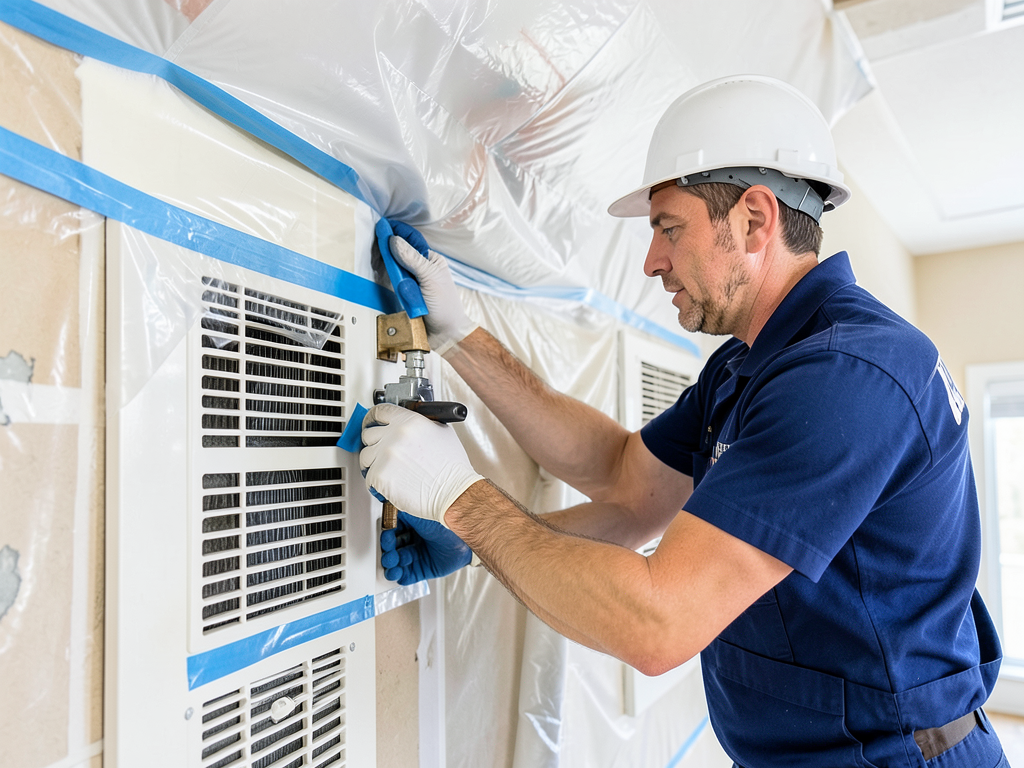
What to Do With Your Vents During a Dusty Minnetonka Home Remodel
Construction dust threatens your HVAC system during any home renovation. The fine particles from drywall sanding, wood cutting, and demolition work travel through your ductwork and damage sensitive components. In Minnetonka’s older homes near Lake Minnetonka, the risk multiplies because many houses have aging systems that cannot handle additional strain. This guide shows you exactly how to protect your vents and keep your HVAC running smoothly throughout your project. Weak Airflow from Vents.
Why Construction Dust is Your HVAC System’s Greatest Enemy
Drywall dust particles measure between 0.5 and 10 microns. Your standard furnace filter only captures particles larger than 10 microns. That means most construction dust passes through your filter and coats your evaporator coils, blower motor, and heat exchanger. A single coat of dust reduces heat transfer efficiency by up to 30%. Over time this buildup causes your system to work harder, increasing energy bills by 15-25% and shortening equipment life by 3-5 years. How Much a New High Efficiency Furnace Really Costs in Minneapolis.
Beyond efficiency loss, construction dust contains silica particles that scratch metal surfaces and create microscopic grooves in your coils. These grooves trap moisture and become breeding grounds for mold and bacteria. In Minnetonka’s humid summers, this creates perfect conditions for microbial growth inside your ductwork.
5 Essential Steps to Prep Your System Before Demolition Starts
- Turn Off the System Completely
Shut down both heating and cooling at the thermostat. Running the system during construction pulls dust through the entire house. Keep it off until all demolition and major cutting work finishes.
- Seal All Supply and Return Vents
Use painter’s plastic and blue painter’s tape to cover every vent register. Do not use duct tape as it leaves residue. Cut plastic sheets slightly larger than each vent and tape them securely on all four sides.
- Close and Seal the Main Return Air Grille
The return air grille typically handles the most airflow. Remove the grille, cover the opening with plastic, and reinstall the grille over the plastic barrier. This creates a double layer of protection.
- Install Temporary Dust Barriers
Hang heavy-duty plastic sheeting to create containment zones. Use 4-6 mil plastic and secure it with painter’s tape or temporary framing. This prevents dust from spreading to other rooms where your HVAC system might pull it in.
- Change to High-Efficiency Filters
Install MERV 11 or MERV 13 filters before starting work. Standard MERV 8 filters cannot capture construction dust. High-efficiency filters cost more but prevent expensive repairs. Replace them every 30 days during construction. EPA duct cleaning guidelines.
Choosing the Right Air Filters for Renovation (MERV Ratings Explained)
| Filter Type | Particle Size Captured | Best For Construction | Cost per Filter |
|---|---|---|---|
| MERV 8 | 3-10 microns | No | $5-8 |
| MERV 11 | 1-3 microns | Yes | $12-15 |
| MERV 13 | 0.3-1 microns | Best | $18-25 |
| HEPA | 0.3 microns and smaller | Overkill | $40-60 |
MERV ratings measure a filter’s ability to capture particles. Higher numbers mean better filtration but also reduced airflow. MERV 11 provides the best balance for construction projects. It captures most drywall dust while maintaining adequate airflow for your system. MERV 13 works even better but may strain older systems. Avoid MERV 16+ filters during construction as they restrict airflow too much.
Replace filters more frequently during renovation than normal. Construction dust loads are 10-20 times higher than typical household dust. A filter that lasts 90 days normally needs replacement every 2-4 weeks during remodeling.
Minneapolis Specific Considerations: Seasonal Protection
Winter renovations in Minnetonka require special precautions. Your furnace must maintain minimum temperatures to prevent frozen pipes, but running it during construction creates dust circulation problems. The solution is strategic timing. Run the system only when workers are not actively cutting or sanding materials. Use space heaters in work areas to maintain temperatures without activating the central system.. Read more about How to Relocate a Furnace to Reclaim Basement Space in Your South Minneapolis Bungalow.
Summer projects face different challenges. High humidity accelerates mold growth on dust-coated surfaces. Install dehumidifiers in work zones and keep your AC running on fan-only mode to circulate air without cooling. This prevents condensation while still filtering some airborne particles.
Spring and fall offer the best conditions for HVAC protection. Mild temperatures allow you to keep the system off completely without risking frozen pipes or excessive heat buildup. These seasons also have lower humidity levels, reducing mold risks from construction dust.
Post-Renovation HVAC Recovery Checklist
- Replace All Filters
Install fresh MERV 11 filters immediately after construction ends. Run the system on fan-only mode for 24-48 hours to circulate and capture remaining dust particles.
- Inspect Coils and Blower Assembly
Remove the furnace access panel and examine the evaporator coils and blower wheel. Construction dust often bypasses filters and accumulates on these components. Clean visible dust with a soft brush or vacuum with brush attachment.
- Check Ductwork for Debris
Look for visible dust buildup in accessible ductwork. Use a flashlight and mirror to inspect supply and return ducts. Heavy dust accumulation requires professional duct cleaning.
- Test System Performance
Run heating and cooling cycles to verify proper operation. Listen for unusual noises that might indicate dust in motors or bearings. Check airflow from vents to ensure no blockages remain.
- Schedule Professional Cleaning
Even with good protection, construction dust penetrates everywhere. Professional duct cleaning removes dust from areas you cannot access. This service typically costs $300-600 for an average Minnetonka home. Fast AC Service for North Loop Condos and Lofts.
Smart Thermostat Protection from Paint and Dust
Smart thermostats contain sensitive electronics that construction dust can damage. Cover your thermostat with painter’s plastic and secure it with blue painter’s tape. Do not use regular tape as it can damage the wall surface when removed.
For extensive painting projects, consider temporarily relocating the thermostat to a protected area. Most smart thermostats disconnect easily from their mounting plates. Label wires before disconnecting to ensure proper reinstallation.
After renovation, clean the thermostat screen with a microfiber cloth slightly dampened with water. Never spray cleaning solutions directly on the device. Check all connections and functionality before removing the protective covering.
Electronic Air Cleaner Maintenance During Construction
Homes with electronic air cleaners need extra protection during renovation. These systems use charged plates to capture particles and are more sensitive to construction dust than standard filters. Turn off the electronic air cleaner during all construction work to prevent damage to the charging components.
After construction, clean the electronic air cleaner cells according to manufacturer instructions. Most require washing in a dishwasher or large sink with mild detergent. Ensure cells are completely dry before reinstalling. Test the system to verify proper operation.
Minneapolis Building Permit Requirements for Major Remodels
Minneapolis requires building permits for most home renovation projects. The Minneapolis Mechanical and Fuel Gas Code mandates that any work affecting HVAC systems must meet current efficiency standards. This includes duct modifications, new vent installations, and system relocations.
Permit applications must include HVAC plans showing how the system will be protected during construction. Inspectors check for proper dust containment and system isolation before issuing final approvals. Failure to protect HVAC systems can result in failed inspections and costly rework.
Commercial projects in Minnetonka follow stricter guidelines under the Minnesota State Building Code. These projects require engineered dust control plans and professional HVAC protection protocols. The cost of compliance is minimal compared to potential equipment damage.
Cost-Benefit Analysis: Prevention vs. Repair
| Protection Method | Initial Cost | Potential Savings | ROI Timeline |
|---|---|---|---|
| Professional Duct Sealing | $500-800 | $2,000-5,000 in repairs | 1-2 years |
| High-Efficiency Filters | $50-100 | $1,000-3,000 in cleaning | Immediate |
| Containment Barriers | $100-200 | $3,000-8,000 in damage | Immediate |
| Post-Renovation Cleaning | $300-600 | $1,500-4,000 in repairs | Immediate |
Investing in HVAC protection during renovation typically costs $500-1,000. The potential repair costs from construction dust damage range from $2,000-10,000. This represents a 200-1,000% return on investment. Beyond direct costs, protecting your system maintains warranty coverage and prevents system failures during extreme weather. Finding an AC Repair Team in Edina That Actually Shows Up on Time.
Common Mistakes to Avoid
- Running the System During Construction
Many homeowners keep their HVAC running to maintain comfort. This circulates dust throughout the entire house and coats every surface in your system.
- Using Standard Filters
Standard MERV 8 filters cannot capture construction dust. They become clogged quickly and restrict airflow, potentially causing system overheating.
- Neglecting Return Air Protection
The return air grille handles the most airflow and is often overlooked. Dust entering here spreads throughout the entire system.
- Removing Vent Covers
Some contractors remove vent covers to improve airflow. This allows direct dust entry into ductwork and should never be done during construction.
When to Call a Professional
Professional HVAC protection becomes necessary when your renovation involves extensive demolition, multiple rooms, or specialized equipment. Signs you need expert help include:
- High-efficiency systems that require precise airflow management
- Historic homes with delicate or irreplaceable HVAC components
- Commercial spaces where downtime costs exceed protection costs
- Projects lasting more than 30 days where dust accumulation becomes severe
Professional services include temporary system isolation, HEPA filtration setups, and post-construction cleaning protocols. These services typically cost $800-2,500 but prevent tens of thousands in potential damage.
Local Success Stories
A Minnetonka family recently completed a kitchen remodel while protecting their 2015 high-efficiency furnace. They invested $600 in professional protection services and avoided $4,200 in potential repairs. Their system maintained peak efficiency throughout the project, and they qualified for their utility rebate because the equipment remained undamaged.
A commercial office in nearby Eden Prairie spent $1,200 on HVAC protection during a major renovation. The investment prevented system failures that would have cost $15,000 in emergency repairs and business interruption. Their tenants never experienced air quality issues during construction.
Future-Proofing Your HVAC Investment
Modern HVAC systems contain increasingly sensitive electronics and variable-speed components. These advanced systems are more vulnerable to construction dust than older models. As homes become smarter and more connected, protecting these investments during renovation becomes even more critical.
Consider upgrading to HEPA filtration or installing dedicated construction filters for future projects. These investments pay dividends not just during renovation but throughout your system’s lifetime by maintaining peak efficiency and preventing premature wear.
Call (651) 588-9677 today to schedule your inspection. Our technicians understand Minnetonka’s unique climate challenges and can create a custom protection plan for your specific renovation project. Switching to a Cold Climate Heat Pump in Minnesota (Is It Worth It?).
Frequently Asked Questions
How long should I keep my HVAC system off during construction?
Keep your system completely off during active construction work like demolition, cutting, and sanding. Once these activities finish and the space is cleaned, you can run the system on fan-only mode for 24-48 hours to circulate and capture remaining dust particles.
Can I use my air conditioner during summer remodeling?
Yes, but only on fan-only mode. Running the cooling function circulates dust through the coils and can cause permanent damage. Use portable fans or dehumidifiers to maintain comfort while keeping your central system protected.
What happens if dust gets into my furnace?
Dust accumulation on furnace components reduces efficiency by up to 30% and can cause overheating. Fine particles can also enter the heat exchanger, creating safety hazards. Professional cleaning typically costs $300-600, but severe contamination may require component replacement.
Should I change filters more often during construction?
Yes, replace filters every 2-4 weeks during construction instead of the normal 60-90 day interval. Construction dust loads are 10-20 times higher than typical household dust, causing filters to clog much faster and potentially restrict airflow to your system. For more information, visit ASHRAE filtration standards.
You may also find this helpful. Adding HVAC to a New Home Gym or Yoga Studio in Orono.
{
“@context”: “https://schema.org”,
“@type”: “BlogPosting”,
“headline”: “What to Do With Your Vents During a Dusty Minnetonka Home Remodel”,
“description”: “Protect your HVAC system from construction dust during your Minnetonka remodel. Learn MERV filter ratings, vent sealing techniques, and post-renovation recovery steps.”,
“wordCount”: 1912,
“datePublished”: “2026-05-26T12:14:00.000Z”,
“dateModified”: “2026-05-26T12:14:00.000Z”,
“inLanguage”: “en-US”,
“mainEntityOfPage”: {
“@type”: “WebPage”,
“@id”: “https://allprohvacminneapolis.com”
},
“publisher”: {
“@type”: “LocalBusiness”,
“name”: “All Pro HVAC Minneapolis”,
“url”: “https://allprohvacminneapolis.com”
},
“author”: {
“@type”: “Organization”,
“name”: “All Pro HVAC Minneapolis”,
“url”: “https://allprohvacminneapolis.com”
},
“image”: {
“@type”: “ImageObject”,
“url”: “https://allprohvacminneapolis.com/wp-content/uploads/2026/03/what-to-do-with-your-vents-during-a-dusty-minneton-1.png”
}
}
{
“@context”: “https://schema.org”,
“@type”: “HVACBusiness”,
“name”: “All Pro HVAC Minneapolis”,
“url”: “https://allprohvacminneapolis.com”,
“address”: {
“@type”: “PostalAddress”,
“addressLocality”: “Minneapolis”
},
“areaServed”: {
“@type”: “City”,
“name”: “Minneapolis”
}
}
{
“@context”: “https://schema.org”,
“@type”: “FAQPage”,
“mainEntity”: [
{
“@type”: “Question”,
“name”: “How long should I keep my HVAC system off during construction?”,
“acceptedAnswer”: {
“@type”: “Answer”,
“text”: “Keep your system completely off during active construction work like demolition, cutting, and sanding. Once these activities finish and the space is cleaned, you can run the system on fan-only mode for 24-48 hours to circulate and capture remaining dust particles.”
}
},
{
“@type”: “Question”,
“name”: “Can I use my air conditioner during summer remodeling?”,
“acceptedAnswer”: {
“@type”: “Answer”,
“text”: “Yes, but only on fan-only mode. Running the cooling function circulates dust through the coils and can cause permanent damage. Use portable fans or dehumidifiers to maintain comfort while keeping your central system protected.”
}
},
{
“@type”: “Question”,
“name”: “What happens if dust gets into my furnace?”,
“acceptedAnswer”: {
“@type”: “Answer”,
“text”: “Dust accumulation on furnace components reduces efficiency by up to 30% and can cause overheating. Fine particles can also enter the heat exchanger, creating safety hazards. Professional cleaning typically costs $300-600, but severe contamination may require component replacement.”
}
},
{
“@type”: “Question”,
“name”: “Should I change filters more often during construction?”,
“acceptedAnswer”: {
“@type”: “Answer”,
“text”: “Yes, replace filters every 2-4 weeks during construction instead of the normal 60-90 day interval. Construction dust loads are 10-20 times higher than typical household dust, causing filters to clog much faster and potentially restrict airflow to your system. For more information, visit ASHRAE filtration standards.”
}
}
]
}
{
“@context”: “https://schema.org”,
“@type”: “HowTo”,
“name”: “Prepare HVAC for Renovation”,
“step”: [
{
“@type”: “HowToStep”,
“position”: 1,
“name”: “Turn Off the System Completely”,
“text”: “Shut down both heating and cooling at the thermostat. Running the system during construction pulls dust through the entire house. Keep it off until all demolition and major cutting work finishes.”
},
{
“@type”: “HowToStep”,
“position”: 2,
“name”: “Seal All Supply and Return Vents”,
“text”: “Use painter’s plastic and blue painter’s tape to cover every vent register. Do not use duct tape as it leaves residue. Cut plastic sheets slightly larger than each vent and tape them securely on all four sides.”
},
{
“@type”: “HowToStep”,
“position”: 3,
“name”: “Close and Seal the Main Return Air Grille”,
“text”: “The return air grille typically handles the most airflow. Remove the grille, cover the opening with plastic, and reinstall the grille over the plastic barrier. This creates a double layer of protection.”
},
{
“@type”: “HowToStep”,
“position”: 4,
“name”: “Install Temporary Dust Barriers”,
“text”: “Hang heavy-duty plastic sheeting to create containment zones. Use 4-6 mil plastic and secure it with painter’s tape or temporary framing. This prevents dust from spreading to other rooms where your HVAC system might pull it in.”
},
{
“@type”: “HowToStep”,
“position”: 5,
“name”: “Change to High-Efficiency Filters”,
“text”: “Install MERV 11 or MERV 13 filters before starting work. Standard MERV 8 filters cannot capture construction dust. High-efficiency filters cost more but prevent expensive repairs. Replace them every 30 days during construction. EPA duct cleaning guidelines.”
}
],
“image”: “https://allprohvacminneapolis.com/wp-content/uploads/2026/03/what-to-do-with-your-vents-during-a-dusty-minneton-1.png”
}
{
“@context”: “https://schema.org”,
“@type”: “BreadcrumbList”,
“itemListElement”: [
{
“@type”: “ListItem”,
“position”: 1,
“name”: “Home”,
“item”: “https://allprohvacminneapolis.com”
},
{
“@type”: “ListItem”,
“position”: 2,
“name”: “Blog”,
“item”: “https://allprohvacminneapolis.com/blog”
},
{
“@type”: “ListItem”,
“position”: 3,
“name”: “What to Do With Your Vents During a Dusty Minnetonka Home Remodel”
}
]
}
{
“@context”: “https://schema.org”,
“@type”: “Service”,
“serviceType”: “HVAC”,
“provider”: {
“@type”: “LocalBusiness”,
“name”: “All Pro HVAC Minneapolis”,
“url”: “https://allprohvacminneapolis.com”
},
“areaServed”: {
“@type”: “City”,
“name”: “Minneapolis”
},
“description”: “Protect your HVAC system from construction dust during your Minnetonka remodel. Learn MERV filter ratings, vent sealing techniques, and post-renovation recovery steps.”
}