
What Every Tangletown Family Needs to Know About Carbon Monoxide and Older Furnaces
Every winter in Minneapolis the temperature drops below zero and your furnace runs constantly. That’s when carbon monoxide becomes more than just a warning label. It becomes a real threat to your family’s safety. This isn’t about scaring you. It’s about giving you the facts you need to protect your home. How Much a New High Efficiency Furnace Really Costs in Minneapolis.
Older homes in Tangletown were built before modern safety codes. Many still have original heating systems or furnaces that are 15 to 25 years old. These systems weren’t designed for today’s airtight construction. When snow blocks your vent pipe or a heat exchanger cracks you get carbon monoxide buildup. The symptoms can feel like the flu. By the time you realize something is wrong it might be too late.
Why Carbon Monoxide Is Different in Minneapolis Homes
Minnesota winters are brutal. Your furnace runs 24/7 for months. That constant use creates wear on critical components. Heat exchangers expand and contract thousands of times each season. Older metal gets brittle. Small cracks form. Those cracks let carbon monoxide leak into your living space. Minnesota Statute 299F.51.
Heavy snow is another factor. When snow piles up against your home it can block the PVC vent pipes on high-efficiency furnaces. Blocked vents force exhaust back into your house. Even a few inches of snow can cause problems. Ice damming around roof vents creates the same issue. Weak Airflow from Vents.
The Minnesota State Building Code requires carbon monoxide alarms within 10 feet of every sleeping area. But alarms only work if they’re maintained and placed correctly. Many older Tangletown homes have alarms that are past their 5 to 7 year lifespan. Dead batteries or outdated units give you a false sense of security.
Common Causes of Carbon Monoxide Leaks in Older Furnaces
Cracked heat exchangers are the most dangerous problem. The heat exchanger separates combustion gases from your indoor air. When metal fatigue creates cracks those gases including carbon monoxide escape into your ductwork. You can’t see these cracks. They’re often smaller than a hair.
Blocked venting is another major cause. Snow ice and even animal nests can block flue pipes. When exhaust can’t escape it backs up into your home. This happens most often during or after heavy snowstorms when you’re not checking outside vents.
Improper burner adjustment creates incomplete combustion. Your furnace needs the right mix of gas and oxygen. When that balance is off you get yellow flames instead of blue. Yellow flames produce more carbon monoxide. This often happens when dust builds up or when gas pressure drifts out of spec.
Backdrafting occurs when your home is too airtight. Exhaust fans range hoods and clothes dryers create negative pressure. If your furnace can’t get enough fresh air it will pull exhaust back into the house through the chimney or vent pipe. UL 2034 Standard.
Warning Signs Your Furnace Might Be Leaking Carbon Monoxide
Physical symptoms are often the first warning. Headaches dizziness and nausea that improve when you leave the house are classic signs. You might notice everyone in the family feeling sick at the same time. Symptoms that get worse in the evening when the furnace runs more are particularly concerning.
Furnace symptoms are more obvious if you know what to look for. Soot around your furnace or on walls near vents indicates incomplete combustion. A yellow or flickering burner flame instead of a steady blue flame means your furnace isn’t burning cleanly. Excessive moisture on windows can signal backdrafting problems.
Strange smells are another indicator. While carbon monoxide itself is odorless you might smell something like exhaust or a sharp chemical odor. This often means other combustion byproducts are leaking too.
Your carbon monoxide detector is your best warning system. If it sounds treat it as an emergency. Don’t assume it’s a false alarm. The detector is working exactly as designed.
Carbon Monoxide Detector Requirements in Minnesota
Minnesota Statute 299F.51 requires carbon monoxide alarms in all single and multi-family dwellings. Alarms must be within 10 feet of each bedroom. If bedrooms are spread across different areas of the home you need multiple detectors.
Alarms must be UL 2034 listed. This is the safety standard that ensures proper sensitivity and response time. Most detectors last 5 to 7 years. After that the sensors degrade and may not detect dangerous levels.
Placement matters. Don’t put detectors near windows or doors where drafts can affect readings. Avoid placing them in garages or near fuel-burning appliances where they might trigger false alarms. The best location is on the wall or ceiling near bedroom doors.
Test your detectors monthly. Replace batteries annually even if they seem fine. Many detectors have a test button. Use it. A non-working detector is worse than no detector because it gives you false confidence.
What to Do If Your Carbon Monoxide Alarm Sounds
Evacuate immediately. Get everyone outside including pets. Don’t waste time gathering belongings. Carbon monoxide can incapacitate you within minutes at high concentrations.
Call 911 once you’re outside. Tell them your carbon monoxide alarm is sounding. Emergency responders have equipment to measure CO levels and can determine if your home is safe.
Don’t re-enter your home until emergency personnel say it’s safe. Opening windows might seem helpful but it can actually make the situation worse by creating drafts that spread the gas.
Contact your gas utility. CenterPoint Energy has a 24/7 emergency line for gas and carbon monoxide concerns. They’ll send a technician to check your home at no charge. Xcel Energy handles electric service but not gas line issues. Fast AC Service for North Loop Condos and Lofts.
Once the immediate danger passes call a licensed HVAC contractor. They need to inspect your furnace and identify the source of the leak before you can safely use your heating system again.
Annual Safety Inspection: What We Check During a Tune-Up
A proper safety inspection takes about an hour. We start with the heat exchanger. Using a specialized camera we inspect every surface for cracks corrosion or signs of wear. This isn’t something you can do with a flashlight.
Next we check the burner assembly. We measure gas pressure adjust the air mixture and verify the flame pattern is correct. Blue flames with distinct inner cones mean your furnace is burning efficiently.
We inspect all venting systems. This includes checking PVC pipes for blockages testing draft pressure and verifying proper clearances. Snow and ice accumulation around vents is a common winter problem in Tangletown.
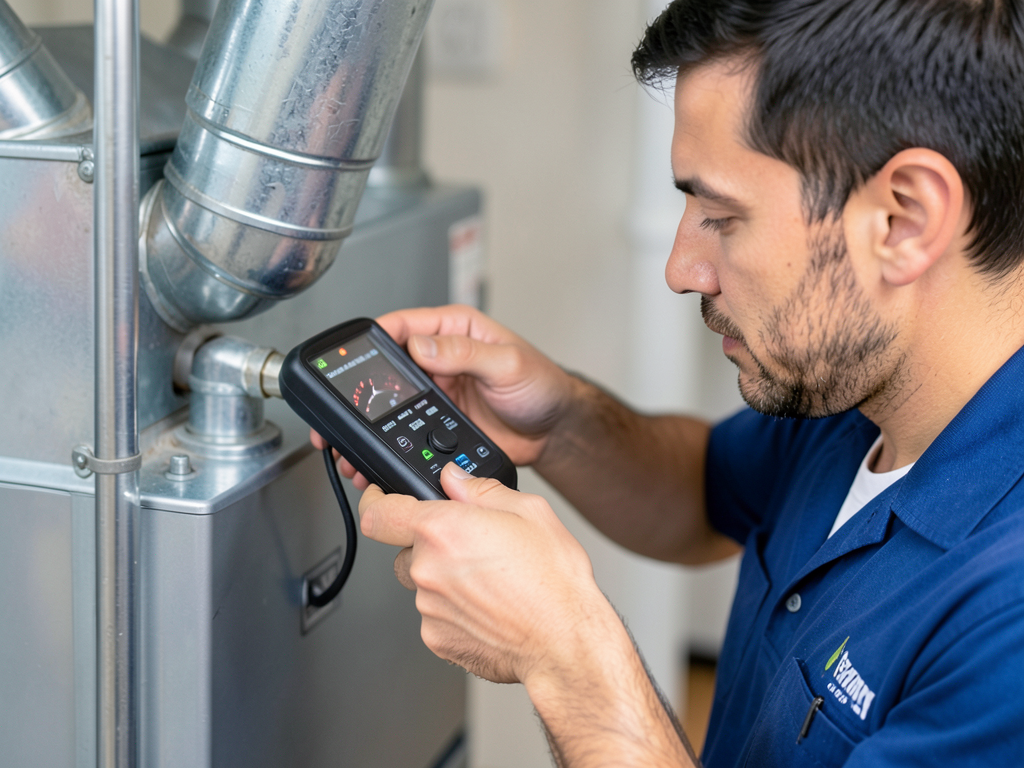
Carbon monoxide testing is standard. We use electronic analyzers to measure CO levels in the flue gases and around the furnace. Levels above 100 ppm in the flue or any detectable amount in your living space indicate a problem.
We also check for gas leaks using electronic sniffers. Even small leaks can create dangerous situations over time. We test all connections and valves.
Finally we verify your carbon monoxide detectors are working and properly placed. We can test them with a CO test kit to ensure they’ll respond when needed.
Choosing the Right HVAC Contractor in Tangletown
Not all HVAC companies perform thorough safety inspections. Ask specifically about heat exchanger testing methods. If they say they just look with a flashlight find someone else.
Verify licensing. In Minnesota HVAC contractors need a Mechanical Contractor License. Ask to see it. The license number should be on their vehicles and paperwork.
Check for NATE certification. This stands for North American Technician Excellence. It means your technician has passed rigorous testing on HVAC systems and safety procedures.
Ask about insurance. Any reputable contractor should carry liability insurance and workers’ compensation. This protects you if something goes wrong during the inspection.
Get a written report. A good inspection includes a detailed report of what was checked findings and recommendations. This gives you documentation for insurance or if you sell your home. Finding an AC Repair Team in Edina That Actually Shows Up on Time.
Emergency availability matters. Carbon monoxide problems don’t happen during business hours. Choose a company that offers 24/7 emergency service.
Special Considerations for Tangletown’s Older Homes
Tangletown was developed in the early 1900s. Many homes still have their original gravity furnaces or early forced-air systems. These units often lack modern safety features like automatic shutoff valves or pressure switches.
Balloon framing common in these homes creates continuous wall cavities from basement to attic. If carbon monoxide leaks into a wall cavity it can spread throughout the house before detectors sense it.
Many Tangletown homes have converted attics or finished basements. These additions can create negative pressure situations that weren’t considered when the original furnace was installed.
The neighborhood’s mature trees create another issue. Falling leaves can block roof vents. Ice storms common in Minneapolis can damage vent caps or create ice dams that redirect exhaust back into your home.
Soil settling around foundations can cause vent pipes to separate or crack. This is especially common in areas with clay soil that expands and contracts with moisture changes.
Cost Factors for Safety Inspections and Repairs
A comprehensive safety inspection typically costs $150 to $250. This includes all the tests mentioned above and a written report. Some companies offer free inspections but these are often sales pitches for new equipment.
Heat exchanger replacement costs $1,000 to $3,000 depending on your furnace model. If your furnace is over 15 years old replacement might be more cost-effective than repair.
Emergency service calls for active CO leaks cost more. Expect to pay $200 to $400 for after-hours service plus any repair costs. This is money well spent when your family’s safety is at risk.
Annual maintenance contracts often include safety inspections. These typically cost $200 to $300 per year and can save you money compared to individual service calls.
Insurance may cover some costs if the CO leak causes damage to your home. Check your policy but don’t wait for insurance approval before fixing a safety hazard. Fixing Old Boilers in Historic South Minneapolis Homes.
Prevention Strategies for Tangletown Homeowners
Schedule annual inspections before winter. Fall is the best time because you can address any issues before you need heat. Don’t wait until your furnace breaks down in January.
Keep vents clear all winter. After every significant snowfall check that your furnace vents are clear. Use a broom not a shovel to avoid damage. Mark vent locations with stakes before snow covers them.
Replace carbon monoxide detectors on schedule. Write the install date on the back with a marker. Set a calendar reminder for replacement at 5 years.
Don’t block furnace airflow. Keep the area around your furnace clear. Don’t store chemicals or flammable materials nearby. Make sure return air vents aren’t blocked by furniture or rugs.
Consider upgrading older furnaces. Units over 20 years old lack modern safety features. New high-efficiency furnaces have sealed combustion automatic shutdown and improved venting systems.
Educate your family. Make sure everyone knows the symptoms of CO poisoning and what to do if the alarm sounds. Practice your evacuation plan.
Local Resources and Emergency Contacts
CenterPoint Energy Emergency Line: 612-372-5050. Available 24/7 for gas leaks and CO concerns.
Minneapolis Fire Department Non-Emergency: 311. For CO detector questions or to request a safety check.
Minnesota Poison Control: 1-800-222-1222. For CO poisoning questions and treatment guidance.
Xcel Energy (Electric Service): 800-895-4999. For power outages affecting your furnace.
Minneapolis Department of Health: 612-673-2301. For information about CO poisoning and prevention.
Local HVAC Emergency Service: (651) 588-9677. All Pro HVAC Minneapolis offers 24/7 emergency response for CO issues.
Frequently Asked Questions
How often should I replace my carbon monoxide detectors?
Replace CO detectors every 5 to 7 years depending on the model. Write the install date on the back and set a reminder. Batteries should be replaced annually even if the detector seems to work.
Can I test my furnace for carbon monoxide myself?
No. Professional testing requires specialized equipment that measures CO levels in flue gases and living spaces. Home test kits are unreliable. Only licensed HVAC technicians should perform CO testing.
What’s the difference between a cracked heat exchanger and a blocked vent?
A cracked heat exchanger allows CO to leak directly into your home’s air supply. A blocked vent prevents exhaust from escaping causing backdrafting. Both are dangerous but require different repairs. A cracked exchanger usually means furnace replacement.
Should I be concerned about my gas fireplace or stove?
Yes. Any gas appliance can produce carbon monoxide. Fireplaces and stoves should be inspected annually. Make sure they have proper venting and install CO detectors on every level of your home.
How much does it cost to replace an old furnace with a new high-efficiency model?
New furnace installation typically costs $4,000 to $8,000 depending on size efficiency rating and installation complexity. High-efficiency models cost more upfront but save money on energy bills over time.
Protecting Your Family Starts with One Call
Carbon monoxide doesn’t wait for convenient times. It can build up while you’re sleeping or when you’re away from home. The only way to know your furnace is safe is to have it professionally inspected.
Tangletown’s older homes need special attention. Original heating systems weren’t designed for today’s construction standards or our extreme Minnesota winters. What worked in 1920 might be a safety hazard today.
Don’t wait for your carbon monoxide detector to sound. By then you already have a problem. Call (651) 588-9677 today to schedule your safety inspection. We’ll check your heat exchanger test for gas leaks and verify your venting is clear.
Winter is coming. Make sure your furnace is ready to keep your family warm and safe. Pick up the phone and call (651) 588-9677 before the next storm hits. Your family’s safety is worth one phone call.
{
“@context”: “https://schema.org”,
“@type”: “BlogPosting”,
“headline”: “What Every Tangletown Family Needs to Know About Carbon Monoxide and Older Furnaces”,
“description”: “Protect your Tangletown home from carbon monoxide. Learn how Minneapolis winters and aging furnaces create hidden dangers. Get expert safety tips from local HVAC pros.”,
“wordCount”: 2302,
“datePublished”: “2026-04-27T07:58:00.000Z”,
“dateModified”: “2026-04-27T07:58:00.000Z”,
“inLanguage”: “en-US”,
“mainEntityOfPage”: {
“@type”: “WebPage”,
“@id”: “https://allprohvacminneapolis.com”
},
“publisher”: {
“@type”: “LocalBusiness”,
“name”: “All Pro HVAC Minneapolis”,
“url”: “https://allprohvacminneapolis.com”
},
“author”: {
“@type”: “Organization”,
“name”: “All Pro HVAC Minneapolis”,
“url”: “https://allprohvacminneapolis.com”
},
“image”: {
“@type”: “ImageObject”,
“url”: “https://allprohvacminneapolis.com/wp-content/uploads/2026/03/what-every-tangletown-family-needs-to-know-about-c-1.png”
}
}
{
“@context”: “https://schema.org”,
“@type”: “HVACBusiness”,
“name”: “All Pro HVAC Minneapolis”,
“url”: “https://allprohvacminneapolis.com”,
“address”: {
“@type”: “PostalAddress”,
“addressLocality”: “Minneapolis”
},
“areaServed”: {
“@type”: “City”,
“name”: “Minneapolis”
}
}
{
“@context”: “https://schema.org”,
“@type”: “FAQPage”,
“mainEntity”: [
{
“@type”: “Question”,
“name”: “How often should I replace my carbon monoxide detectors?”,
“acceptedAnswer”: {
“@type”: “Answer”,
“text”: “Replace CO detectors every 5 to 7 years depending on the model. Write the install date on the back and set a reminder. Batteries should be replaced annually even if the detector seems to work.”
}
},
{
“@type”: “Question”,
“name”: “Can I test my furnace for carbon monoxide myself?”,
“acceptedAnswer”: {
“@type”: “Answer”,
“text”: “No. Professional testing requires specialized equipment that measures CO levels in flue gases and living spaces. Home test kits are unreliable. Only licensed HVAC technicians should perform CO testing.”
}
},
{
“@type”: “Question”,
“name”: “What’s the difference between a cracked heat exchanger and a blocked vent?”,
“acceptedAnswer”: {
“@type”: “Answer”,
“text”: “A cracked heat exchanger allows CO to leak directly into your home’s air supply. A blocked vent prevents exhaust from escaping causing backdrafting. Both are dangerous but require different repairs. A cracked exchanger usually means furnace replacement.”
}
},
{
“@type”: “Question”,
“name”: “Should I be concerned about my gas fireplace or stove?”,
“acceptedAnswer”: {
“@type”: “Answer”,
“text”: “Yes. Any gas appliance can produce carbon monoxide. Fireplaces and stoves should be inspected annually. Make sure they have proper venting and install CO detectors on every level of your home.”
}
},
{
“@type”: “Question”,
“name”: “How much does it cost to replace an old furnace with a new high-efficiency model?”,
“acceptedAnswer”: {
“@type”: “Answer”,
“text”: “New furnace installation typically costs $4,000 to $8,000 depending on size efficiency rating and installation complexity. High-efficiency models cost more upfront but save money on energy bills over time.”
}
}
]
}
{
“@context”: “https://schema.org”,
“@type”: “BreadcrumbList”,
“itemListElement”: [
{
“@type”: “ListItem”,
“position”: 1,
“name”: “Home”,
“item”: “https://allprohvacminneapolis.com”
},
{
“@type”: “ListItem”,
“position”: 2,
“name”: “Blog”,
“item”: “https://allprohvacminneapolis.com/blog”
},
{
“@type”: “ListItem”,
“position”: 3,
“name”: “What Every Tangletown Family Needs to Know About Carbon Monoxide and Older Furnaces”
}
]
}
{
“@context”: “https://schema.org”,
“@type”: “Service”,
“serviceType”: “HVAC”,
“provider”: {
“@type”: “LocalBusiness”,
“name”: “All Pro HVAC Minneapolis”,
“url”: “https://allprohvacminneapolis.com”
},
“areaServed”: {
“@type”: “City”,
“name”: “Minneapolis”
},
“description”: “Protect your Tangletown home from carbon monoxide. Learn how Minneapolis winters and aging furnaces create hidden dangers. Get expert safety tips from local HVAC pros.”
}