
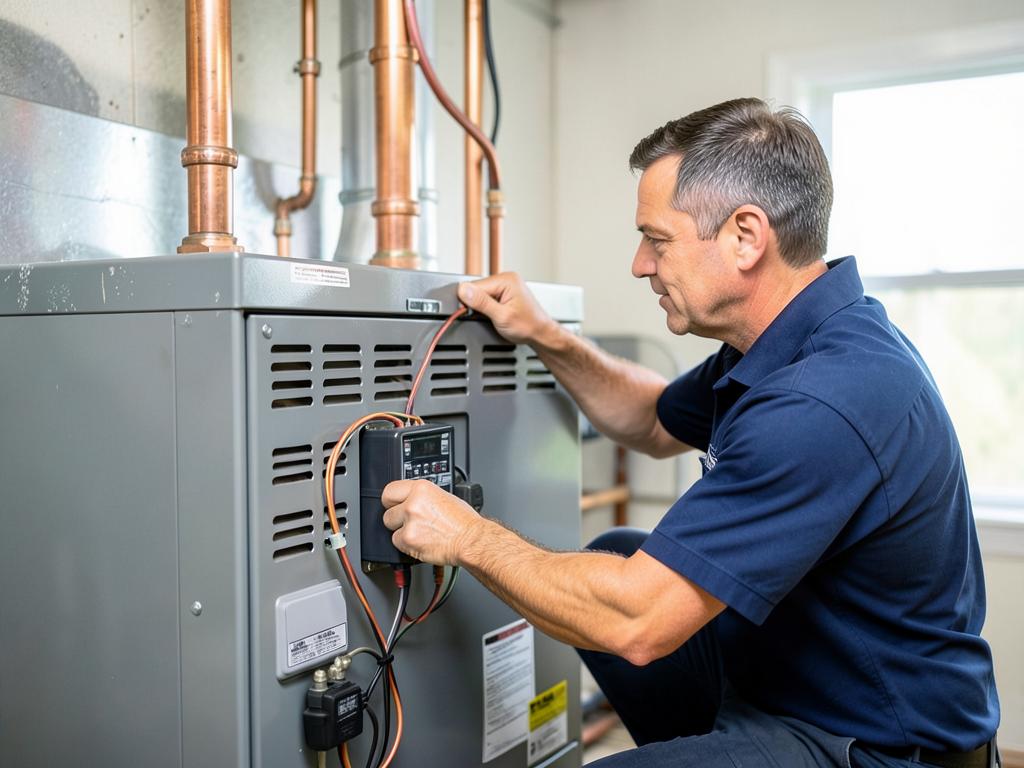
Protecting Your Hardwood Floors from Winter Cracks with Precise Humidity Control
Your hardwood floors are beautiful when installed but Minneapolis winters can turn them into a costly nightmare. When indoor humidity drops below 30 percent during the heating season your expensive oak or maple flooring begins to shrink like a dried sponge. This creates unsightly gaps that collect dirt and can become permanent.
The solution is not just adding a portable humidifier. It requires precise whole-home humidity control integrated with your HVAC system. Understanding the science behind wood movement and how your furnace affects indoor moisture is the first step to protecting your investment. How Much a New High Efficiency Furnace Really Costs in Minneapolis.
The Golden Range: What is the ideal humidity for hardwood?
According to the National Wood Flooring Association the ideal indoor relative humidity for hardwood floors is between 30 and 50 percent. This range keeps wood moisture content stable at 6 to 9 percent which prevents both shrinkage and expansion cycles. National Wood Flooring Association.
Temperature matters too. Keep your home between 60 and 80 degrees Fahrenheit for optimal wood stability. When humidity falls outside this range you will see problems develop quickly.
During Minneapolis winters outdoor air holds almost no moisture. When this dry air enters your home and gets heated by your furnace the relative humidity can plummet to 10 or 15 percent. Your hardwood floors respond by losing moisture and contracting.
The Science of Wood: Why Minneapolis Winters are Hard on Floors
Wood is hygroscopic which means it constantly exchanges moisture with the surrounding air. This process continues even after the tree is cut and the wood is finished into flooring.
When relative humidity drops wood cells lose water and shrink. The technical term is dimensional instability. In winter this causes gapping between boards. You might notice quarter-inch spaces appearing between planks that were tight in summer.
The opposite happens in summer when humidity rises above 50 percent. Wood absorbs moisture and expands. This can cause cupping where board edges rise higher than the center or crowning where the middle of the board becomes higher than the edges.
Minneapolis experiences extreme humidity swings. Summer dew points often exceed 70 degrees while winter air can hold less than 10 percent moisture. These rapid changes stress wood flooring repeatedly throughout the year.
Warning Signs: How to tell if your humidity is off
Cracks and gaps between boards are the most obvious sign of low humidity. These typically appear in winter when heating systems run constantly. Gaps wider than 1/8 inch indicate serious moisture loss.
Squeaking or creaking sounds when walking on the floor suggest boards are rubbing together due to shrinkage. This noise often gets worse in winter and improves in summer.
Cupping appears as a washboard effect across the floor surface. Edges of boards are higher than the center. This indicates moisture gain from high humidity or water intrusion.
Crowning is the opposite of cupping. The center of boards rises above the edges creating a rounded surface. This can happen when moisture is added to an already cupped floor or when humidity remains high for extended periods.
Seasonal movement is normal but excessive gaps or persistent cupping indicate your home needs humidity control intervention.
HVAC Solutions for Humidity Control
Whole-home humidifiers attach directly to your furnace and add moisture to the air as it circulates. This is the most effective solution for Minneapolis homes where winter humidity drops dramatically.
Bypass humidifiers use the pressure difference between supply and return ducts to draw air through a water panel. They are simple and reliable but add less moisture than power models.
Power humidifiers include a fan that forces air through the water panel. They can add significantly more moisture making them better for larger homes or those with very dry winter air.
Steam humidifiers boil water to create pure steam that is injected directly into the ductwork. They provide the most precise humidity control and can maintain higher humidity levels than evaporative models.
Dehumidification is equally important in summer. Your air conditioner removes some moisture but may not be enough during humid Minnesota summers. Dedicated dehumidifiers can maintain optimal levels when AC alone cannot keep up.
Smart humidistats monitor indoor humidity and automatically adjust humidifier output. They can also integrate with your thermostat to coordinate heating and humidity control based on outdoor conditions.
Monitoring Your Home: The role of the Hygrometer
A hygrometer is essential for tracking indoor humidity levels. Place one in the main living area away from direct sunlight or drafts for accurate readings.
Different rooms may have different humidity levels. Basements tend to be more humid while rooms with exterior walls may be drier in winter. Monitor multiple locations to understand your home’s moisture profile.
Digital hygrometers are more accurate than analog models. Look for units that measure both temperature and humidity for complete environmental monitoring.
Many smart thermostats include built-in humidity sensors. These can send alerts when levels fall outside your target range and automatically adjust connected humidifiers.
Record humidity readings daily for the first month after installing humidity control equipment. This helps establish baseline patterns and identifies any problem areas that need attention.
Why Minneapolis HVAC Maintenance Matters for Flooring Longevity
Your HVAC system is the primary driver of indoor humidity in Minnesota homes. A well-maintained system provides consistent temperature and humidity control while a neglected one creates problems.
Furnace tune-ups should include checking humidifier operation. Water panels need replacement annually and moving parts require lubrication. A malfunctioning humidifier cannot protect your floors.
Air filters affect humidity control. Dirty filters restrict airflow reducing the effectiveness of both heating and humidification. Replace filters every 1-3 months depending on your home’s dust levels. Weak Airflow from Vents.
Leaky ductwork allows conditioned air to escape reducing system efficiency and humidity control. Duct sealing can improve both comfort and energy bills while protecting your flooring investment.
Consider a professional HVAC inspection before winter heating season begins. This ensures all humidity control components are working properly when you need them most.
Seasonal Adjustment Strategies
Winter settings require higher humidity output. Start increasing humidifier output in October as outdoor temperatures drop. Monitor indoor levels and adjust as needed to maintain 30-50 percent.
Spring transition means reducing humidity output gradually. Sudden changes can stress wood flooring. Lower settings by 5 percent increments over several weeks.
Summer may require dehumidification rather than humidification. Set dehumidifiers to maintain 45-50 percent humidity. This prevents both excess moisture and wood shrinkage from overcooling.
Fall preparation involves cleaning humidifier components and checking water quality. Hard water can leave mineral deposits that reduce efficiency. Consider a water softener if mineral buildup is severe. EPA indoor air quality guidelines.
Monitor outdoor conditions using weather apps or smart home systems. This helps anticipate when to adjust indoor humidity settings based on seasonal changes.
Wood Species Sensitivity
Not all wood flooring reacts the same to humidity changes. Oak is relatively stable but still requires proper humidity control. Maple and hickory are more dimensionally stable than oak.
Exotic woods like Brazilian cherry or teak often have higher natural moisture content and may require different humidity targets. Check manufacturer specifications for your specific flooring.
Engineered hardwood is more dimensionally stable than solid wood because the layers are oriented in different directions. This reduces but does not eliminate the need for humidity control.
Wide plank flooring shows gaps more dramatically than narrow strips. Boards wider than five inches are more prone to movement and may require tighter humidity control.
Prefinished flooring may have different moisture tolerances than site-finished products. Always follow the manufacturer’s humidity recommendations for your specific flooring type.
Cost Considerations and ROI
Whole-home humidifiers range from $300 to $1200 depending on type and capacity. Professional installation adds $200 to $500. This is significantly less than replacing damaged flooring which can cost $8 to $15 per square foot.
Steam humidifiers cost more upfront but provide the most precise control and lowest operating costs over time. They are ideal for homes with valuable flooring or severe winter dryness.
Energy costs for humidification are minimal. Most whole-home units use less electricity than a 40-watt light bulb. Water usage is the primary operating cost at approximately 3 to 10 gallons per day.
The return on investment includes not just floor protection but also improved comfort, reduced static electricity, and better indoor air quality. Many homeowners find they can lower thermostat settings slightly when proper humidity is maintained.
Installation Best Practices
Humidifier location matters for even distribution. Install on the supply side of the furnace when possible for better moisture distribution throughout the home.
Water quality affects humidifier performance. Hard water requires more frequent cleaning and filter replacement. Consider a water treatment system if mineral buildup is a recurring issue.
Proper drainage prevents water damage around the humidifier. Ensure the drain line has proper slope and is not kinked or blocked.
Electrical connections must meet local codes. Most humidifiers require a 24-volt transformer and proper grounding. Professional installation ensures code compliance and warranty protection.
Test the system thoroughly after installation. Check for leaks, proper humidity output, and integration with existing HVAC controls.
Frequently Asked Questions
What is the ideal indoor humidity for hardwood floors?
The National Wood Flooring Association recommends maintaining indoor relative humidity between 30 and 50 percent with temperatures between 60 and 80 degrees Fahrenheit.
How do I know if my home is too dry for my hardwood floors?
Signs include gaps wider than 1/8 inch between boards, squeaking sounds when walking, and visible cracks in the wood surface. A hygrometer reading below 30 percent confirms dry conditions.
Can I use a portable humidifier instead of a whole-home system?
Portable units can help but are less effective for whole-house humidity control. They require frequent refilling and cannot distribute moisture as evenly as whole-home systems integrated with your HVAC.
How much does a whole-home humidifier cost in Minneapolis?
Basic bypass models start around $300 while high-end steam units cost up to $1200. Professional installation typically adds $200 to $500 to the total cost.
Will a humidifier damage my furnace?
When properly installed and maintained humidifiers do not damage furnaces. Regular maintenance including water panel replacement and cleaning prevents any potential issues.
How often should I replace the water panel in my humidifier?
Most manufacturers recommend annual replacement at the start of heating season. Homes with hard water may need more frequent replacement to prevent mineral buildup.
Can low humidity void my hardwood floor warranty?
Many flooring manufacturers require maintaining specific humidity ranges to keep warranties valid. Check your flooring warranty for exact requirements and documentation needed.
What temperature should I set my thermostat to protect hardwood floors?
Maintain temperatures between 60 and 80 degrees Fahrenheit. Extreme temperature swings can affect humidity levels and cause wood movement even when humidity is properly controlled.
Do I need a humidifier in the summer?
Summer humidity control typically requires dehumidification rather than humidification. Your air conditioner removes some moisture but a dedicated dehumidifier may be needed during humid periods.
How long does it take to notice improvements after installing a humidifier?
You may notice improved comfort within hours but significant changes in wood flooring gaps can take several weeks as moisture content equalizes throughout the boards.
Final Thoughts
Protecting your hardwood floors from winter damage requires understanding the relationship between your HVAC system and indoor humidity. Minneapolis winters create conditions that can destroy expensive flooring without proper moisture control.
Whole-home humidification integrated with your furnace provides the most effective protection. Combined with proper monitoring and seasonal adjustments you can maintain the 30 to 50 percent humidity range that keeps wood stable year-round.
The cost of prevention is far less than the cost of repair or replacement. A properly sized and installed humidifier system protects not just your floors but also your comfort and indoor air quality. Finding an AC Repair Team in Edina That Actually Shows Up on Time.
Ready to protect your hardwood floors from winter damage? Call (651) 588-9677 today to schedule your inspection. Our Minneapolis HVAC experts will evaluate your current system and recommend the perfect humidity control solution for your home. Don’t wait until gaps appear pick up the phone and call (651) 588-9677 before the next cold snap hits.
Visit our website at allprohvacminneapolis.com to learn more about our whole-home humidification solutions and seasonal maintenance plans.
{
“@context”: “https://schema.org”,
“@type”: “BlogPosting”,
“headline”: “Protecting Your Hardwood Floors from Winter Cracks with Precise Humidity Control”,
“description”: “Minneapolis winters destroy hardwood floors. Learn the exact humidity range and HVAC solutions to prevent costly cracks and gaps in your Minnesota home.”,
“wordCount”: 2060,
“datePublished”: “2026-06-09T08:07:00.000Z”,
“dateModified”: “2026-06-09T08:07:00.000Z”,
“inLanguage”: “en-US”,
“mainEntityOfPage”: {
“@type”: “WebPage”,
“@id”: “https://allprohvacminneapolis.com”
},
“publisher”: {
“@type”: “LocalBusiness”,
“name”: “All Pro HVAC Minneapolis”,
“url”: “https://allprohvacminneapolis.com”
},
“author”: {
“@type”: “Organization”,
“name”: “All Pro HVAC Minneapolis”,
“url”: “https://allprohvacminneapolis.com”
},
“image”: {
“@type”: “ImageObject”,
“url”: “https://allprohvacminneapolis.com/wp-content/uploads/2026/03/protecting-your-hardwood-floors-from-winter-cracks-1.png”
}
}
{
“@context”: “https://schema.org”,
“@type”: “HVACBusiness”,
“name”: “All Pro HVAC Minneapolis”,
“url”: “https://allprohvacminneapolis.com”,
“address”: {
“@type”: “PostalAddress”,
“addressLocality”: “Minneapolis”
},
“areaServed”: {
“@type”: “City”,
“name”: “Minneapolis”
}
}
{
“@context”: “https://schema.org”,
“@type”: “FAQPage”,
“mainEntity”: [
{
“@type”: “Question”,
“name”: “The Golden Range: What is the ideal humidity for hardwood?”,
“acceptedAnswer”: {
“@type”: “Answer”,
“text”: “According to the National Wood Flooring Association the ideal indoor relative humidity for hardwood floors is between 30 and 50 percent. This range keeps wood moisture content stable at 6 to 9 percent which prevents both shrinkage and expansion cycles. National Wood Flooring Association.”
}
},
{
“@type”: “Question”,
“name”: “What is the ideal indoor humidity for hardwood floors?”,
“acceptedAnswer”: {
“@type”: “Answer”,
“text”: “The National Wood Flooring Association recommends maintaining indoor relative humidity between 30 and 50 percent with temperatures between 60 and 80 degrees Fahrenheit.”
}
},
{
“@type”: “Question”,
“name”: “How do I know if my home is too dry for my hardwood floors?”,
“acceptedAnswer”: {
“@type”: “Answer”,
“text”: “Signs include gaps wider than 1/8 inch between boards, squeaking sounds when walking, and visible cracks in the wood surface. A hygrometer reading below 30 percent confirms dry conditions.”
}
},
{
“@type”: “Question”,
“name”: “Can I use a portable humidifier instead of a whole-home system?”,
“acceptedAnswer”: {
“@type”: “Answer”,
“text”: “Portable units can help but are less effective for whole-house humidity control. They require frequent refilling and cannot distribute moisture as evenly as whole-home systems integrated with your HVAC.”
}
},
{
“@type”: “Question”,
“name”: “How much does a whole-home humidifier cost in Minneapolis?”,
“acceptedAnswer”: {
“@type”: “Answer”,
“text”: “Basic bypass models start around $300 while high-end steam units cost up to $1200. Professional installation typically adds $200 to $500 to the total cost.”
}
},
{
“@type”: “Question”,
“name”: “Will a humidifier damage my furnace?”,
“acceptedAnswer”: {
“@type”: “Answer”,
“text”: “When properly installed and maintained humidifiers do not damage furnaces. Regular maintenance including water panel replacement and cleaning prevents any potential issues.”
}
},
{
“@type”: “Question”,
“name”: “How often should I replace the water panel in my humidifier?”,
“acceptedAnswer”: {
“@type”: “Answer”,
“text”: “Most manufacturers recommend annual replacement at the start of heating season. Homes with hard water may need more frequent replacement to prevent mineral buildup.”
}
},
{
“@type”: “Question”,
“name”: “Can low humidity void my hardwood floor warranty?”,
“acceptedAnswer”: {
“@type”: “Answer”,
“text”: “Many flooring manufacturers require maintaining specific humidity ranges to keep warranties valid. Check your flooring warranty for exact requirements and documentation needed.”
}
},
{
“@type”: “Question”,
“name”: “What temperature should I set my thermostat to protect hardwood floors?”,
“acceptedAnswer”: {
“@type”: “Answer”,
“text”: “Maintain temperatures between 60 and 80 degrees Fahrenheit. Extreme temperature swings can affect humidity levels and cause wood movement even when humidity is properly controlled.”
}
},
{
“@type”: “Question”,
“name”: “Do I need a humidifier in the summer?”,
“acceptedAnswer”: {
“@type”: “Answer”,
“text”: “Summer humidity control typically requires dehumidification rather than humidification. Your air conditioner removes some moisture but a dedicated dehumidifier may be needed during humid periods.”
}
},
{
“@type”: “Question”,
“name”: “How long does it take to notice improvements after installing a humidifier?”,
“acceptedAnswer”: {
“@type”: “Answer”,
“text”: “You may notice improved comfort within hours but significant changes in wood flooring gaps can take several weeks as moisture content equalizes throughout the boards.”
}
}
]
}
{
“@context”: “https://schema.org”,
“@type”: “BreadcrumbList”,
“itemListElement”: [
{
“@type”: “ListItem”,
“position”: 1,
“name”: “Home”,
“item”: “https://allprohvacminneapolis.com”
},
{
“@type”: “ListItem”,
“position”: 2,
“name”: “Blog”,
“item”: “https://allprohvacminneapolis.com/blog”
},
{
“@type”: “ListItem”,
“position”: 3,
“name”: “Protecting Your Hardwood Floors from Winter Cracks with Precise Humidity Control”
}
]
}
{
“@context”: “https://schema.org”,
“@type”: “Service”,
“serviceType”: “HVAC”,
“provider”: {
“@type”: “LocalBusiness”,
“name”: “All Pro HVAC Minneapolis”,
“url”: “https://allprohvacminneapolis.com”
},
“areaServed”: {
“@type”: “City”,
“name”: “Minneapolis”
},
“description”: “Minneapolis winters destroy hardwood floors. Learn the exact humidity range and HVAC solutions to prevent costly cracks and gaps in your Minnesota home.”
}