
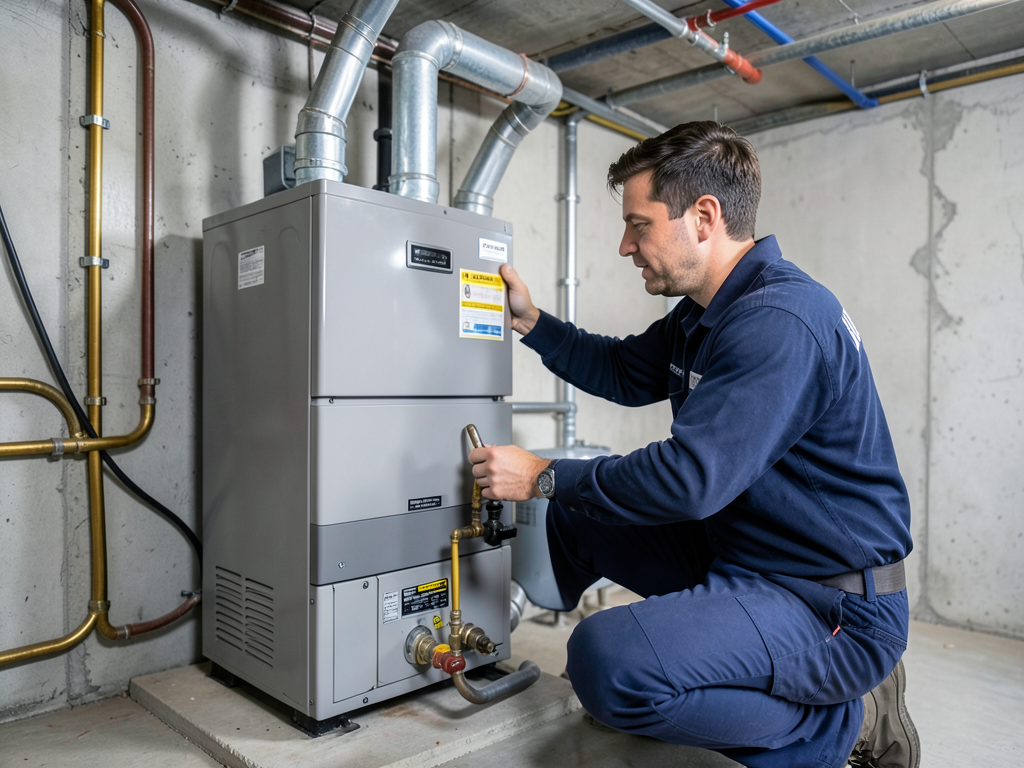
Comparing Gas Furnaces and Electric Heat Pumps for Historic Homes in Prospect Park
Prospect Park homeowners face a tough choice when replacing their heating system. Gas furnaces deliver proven cold-weather performance while heat pumps offer lower operating costs and reduced emissions. This comparison breaks down the technical differences, installation requirements, and long-term economics for Minneapolis’s unique climate conditions. How Much a New High Efficiency Furnace Really Costs in Minneapolis.
Minneapolis winters push heating equipment to its limits. The city experiences an average of 23 sub-zero days per year with design temperatures reaching -11°F according to ASHRAE standards. These extreme conditions affect equipment selection more than any marketing claim or efficiency rating.
Performance in Sub-Zero Temps: The Cold-Climate Heat Pump Reality
Traditional heat pumps lose efficiency rapidly as temperatures drop below freezing. Standard units extract heat from outdoor air but struggle when that air contains minimal thermal energy. A conventional heat pump at 47°F might deliver 3 units of heat for every 1 unit of electricity consumed. At 5°F that ratio drops to 2:1 or lower. Energy Department heat pump guide.
Cold climate air source heat pumps (ccASHP) use variable-speed compressors and enhanced defrost cycles to maintain operation at temperatures approaching -20°F. The Mitsubishi Hyper-Heat series and Carrier Infinity 20 with Greenspeed Intelligence represent the current state of the art. These units can maintain heating capacity down to -15°F while delivering 76% of their rated capacity at -5°F. Switching to a Cold Climate Heat Pump in Minnesota (Is It Worth It?).
Gas furnaces operate independently of outdoor temperature. A properly sized 95% AFUE furnace delivers consistent heat output regardless of whether it’s 40°F or -20°F outside. The combustion process creates heat from natural gas rather than extracting it from cold air. This reliability comes with higher carbon emissions and fuel costs that fluctuate with natural gas market prices.
Prospect Park’s mature tree canopy and historic home construction create unique challenges. Many homes built before 1940 lack adequate insulation and air sealing. Heat loss calculations for these structures often exceed modern building standards by 40-60%. This increased load affects equipment sizing decisions and operating costs.
Cost Analysis: Installation vs. Monthly Utility Bills
Initial installation costs vary significantly between system types. A standard 80,000 BTU gas furnace with proper venting and gas line connections typically costs $4,500-$6,500 installed. Heat pump installations range from $7,000-$12,000 depending on capacity and features. Cold climate models command premium pricing due to advanced compressor technology.
Operating costs depend on local utility rates and seasonal conditions. Xcel Energy’s residential electric rate averages $0.14 per kWh while CenterPoint Energy’s natural gas rate runs approximately $0.92 per therm. A heat pump delivering 3 units of heat per kWh costs about $0.047 per 1,000 BTU. Natural gas at $0.92 per therm (100,000 BTU) costs approximately $0.0092 per 1,000 BTU. Xcel Energy rebates.
Seasonal performance reveals the true cost picture. During mild fall and spring months, heat pumps operate at peak efficiency with COP values of 3.0-4.0. As temperatures drop below 25°F efficiency decreases. At 0°F a heat pump might achieve COP of 2.0 while a gas furnace maintains 95% efficiency.
The following table compares annual heating costs for a typical 2,000 square foot Prospect Park home based on Minneapolis climate data and current utility rates:
| System Type | Annual Heating Cost | Efficiency Range | Carbon Emissions (lbs CO2) |
|---|---|---|---|
| 95% Gas Furnace | $1,250 | 95% constant | 8,200 |
| Standard Heat Pump | $850 | 200-300% seasonal | 4,100 |
| Cold Climate Heat Pump | $720 | 250-350% seasonal | 3,600 |
| Dual Fuel System | $980 | 95% gas + 300% electric | 6,100 |
Heat pump efficiency ratings use HSPF2 (Heating Seasonal Performance Factor 2) for heating performance and SEER2 (Seasonal Energy Efficiency Ratio 2) for cooling. Minneapolis requires minimum HSPF2 of 8.2 for cold climate certification. Premium models achieve HSPF2 ratings of 10.0-12.0.
The Hybrid Solution (Dual Fuel Strategy)
Dual fuel systems combine the reliability of gas heating with the efficiency of electric heat pumps. These installations use a heat pump for primary heating down to a predetermined outdoor temperature, typically 25-35°F. When temperatures drop below this balance point, the system automatically switches to the gas furnace.
This approach maximizes efficiency during mild conditions while maintaining full heating capacity during extreme cold. The heat pump handles approximately 70-80% of annual heating hours in Minneapolis. The gas furnace operates only during the coldest periods when heat pump efficiency drops below economic viability.
Installation requires compatible equipment and proper controls. The heat pump must communicate with the furnace through a dual fuel compatible thermostat. Most manufacturers offer matched system packages designed for seamless integration. Carrier’s Performance series, Trane’s XV20i, and Lennox’s XP25 all support dual fuel operation.
Maintenance requirements increase slightly with dual fuel systems. Both the heat pump and furnace need annual service. Heat pump outdoor units require coil cleaning and refrigerant level checks. Gas furnaces need combustion analysis and heat exchanger inspection. The combined maintenance cost averages $200-$300 annually. Fast AC Service for North Loop Condos and Lofts.
Minnesota Rebates and Tax Credits in 2026
Federal incentives through the Inflation Reduction Act provide substantial savings for qualifying equipment. The 25C tax credit covers 30% of installation costs up to $2,000 for heat pumps meeting CEE (Consortium for Energy Efficiency) cold climate specifications. Gas furnaces with AFUE ratings of 97% or higher qualify for 30% credits up to $600.
Xcel Energy offers rebates ranging from $200-$1,500 for heat pump installations depending on efficiency ratings and existing system replacement. CenterPoint Energy provides $200 rebates for high-efficiency gas furnaces with AFUE ratings of 95% or higher. These utility rebates apply to both residential and commercial installations.
Minnesota’s state-level programs through the Department of Commerce Energy Resources provide additional incentives. The Weatherization Assistance Program offers free energy audits and efficiency upgrades for qualifying low-income households. The Sustainable Buildings 2030 program provides technical assistance and recognition for high-performance building projects.
Local utility programs often have limited funding and first-come-first-served availability. Applications must include equipment specifications, efficiency ratings, and contractor certification numbers. Most programs require installation by licensed HVAC contractors familiar with local building codes and permit requirements.
Maintenance and Lifespan in the Midwest
Minneapolis’s climate creates unique maintenance challenges. Salt from winter road treatment accumulates on outdoor equipment. Humidity levels during summer months promote corrosion. Temperature swings cause expansion and contraction stress on components. These factors reduce equipment lifespan compared to milder climates.
Heat pump outdoor units require specific maintenance procedures. The defrost cycle periodically melts ice accumulation on the outdoor coil. During defrost, the system temporarily operates in cooling mode to extract heat from indoors. This process creates water runoff that can freeze on cold surfaces. Proper drainage and clearance prevent ice buildup.
Gas furnaces need combustion analysis to verify proper operation. Minneapolis building code requires minimum 5-foot clearance from combustible materials and proper venting through approved chimneys or PVC piping. High-efficiency furnaces produce condensate that requires drain line installation and freeze protection.
Typical equipment lifespan in Minneapolis ranges from 15-20 years for heat pumps and 20-25 years for gas furnaces. Heat pumps experience more wear due to year-round operation and outdoor exposure. Regular maintenance extends service life and maintains efficiency ratings. Neglected systems can lose 10-15% efficiency annually.
The Minnesota Department of Labor and Industry requires HVAC contractors to maintain proper licensing and insurance. Contractors must pull permits for equipment replacements and schedule inspections when required. These regulations ensure installations meet safety standards and building code requirements.
Making the Right Choice for Your Prospect Park Home
Several factors determine the optimal heating system for your specific situation. Home age and construction quality affect heat loss calculations. Existing ductwork condition influences installation costs. Utility rate structures impact operating economics. Environmental priorities guide equipment selection.
Older Prospect Park homes often benefit from hybrid systems. The combination provides reliability for historic structures while reducing energy consumption. Modern building codes require minimum efficiency standards that may necessitate system upgrades during major renovations.
Heat pumps offer advantages for homes with existing air conditioning. The same outdoor unit provides both heating and cooling functions. This eliminates the need for separate furnace and air conditioner installations. Heat pumps also produce dehumidification during cooling mode, improving comfort during humid summer months.
Gas furnaces remain the best choice for homes with existing gas infrastructure and minimal cooling needs. The lower initial cost and proven reliability appeal to many homeowners. Gas availability through CenterPoint Energy’s extensive distribution network ensures consistent fuel supply during extreme weather events. Weak Airflow from Vents.
Professional load calculations determine proper equipment sizing. Oversized equipment cycles frequently, reducing efficiency and comfort. Undersized equipment runs continuously during extreme weather. Manual J calculations account for insulation levels, window areas, orientation, and local climate data to determine optimal capacity.
Installation Considerations for Historic Properties
Prospect Park’s historic district status creates additional requirements for heating system replacements. The Minneapolis Heritage Preservation Commission reviews exterior modifications to ensure compatibility with neighborhood character. Heat pump outdoor units must be positioned to minimize visual impact from public right-of-ways.
Many historic homes lack space for modern equipment. Basement clearances may not accommodate standard furnace heights. Attic spaces might not support air handler weight. These constraints require creative solutions like compact equipment or alternative installation locations.
Electrical service capacity affects heat pump installation options. Older homes often have 60-100 amp service panels. Heat pumps require dedicated circuits with proper amperage. Service upgrades add significant cost but enable installation of high-efficiency equipment.
Permitting requirements vary by Minneapolis neighborhood. The city requires mechanical permits for equipment replacements. Historic district properties need additional approvals. Permit fees range from $50-$300 depending on project scope and location.
Future-Proofing Your Heating Investment
Energy market trends favor electrification of home heating. Xcel Energy plans to achieve 80% carbon reduction by 2030 and 100% carbon-free electricity by 2050. This transition increases the value of high-efficiency electric heating equipment over time.
Gas utility rates face pressure from renewable energy competition and carbon pricing initiatives. Natural gas prices showed significant volatility during recent years. Electric rates benefit from diverse generation sources including wind, solar, and nuclear power.
Heat pump technology continues advancing rapidly. Variable-speed compressors, improved refrigerants, and enhanced controls increase efficiency and reliability. Future equipment generations may eliminate the need for backup heating in Minneapolis’s climate.
Smart home integration enhances system control and monitoring. Wi-Fi enabled thermostats provide remote access, energy usage tracking, and automated optimization. These features improve comfort while reducing energy waste through intelligent scheduling and adaptive learning.
Getting Professional Assessment
Accurate system selection requires professional evaluation of your specific home conditions. Contractors should perform heat loss calculations, inspect existing equipment, and evaluate installation constraints. Written proposals should include equipment specifications, efficiency ratings, warranty terms, and total installed costs.
Ask contractors about their experience with Minneapolis climate conditions and historic home requirements. Request references from similar projects in your neighborhood. Verify licensing, insurance, and manufacturer certifications before signing contracts.
Energy audits provide valuable information for system selection. These assessments identify insulation deficiencies, air leakage, and other factors affecting heating performance. Many utility programs offer free or discounted energy audits to qualifying customers.
Don’t rush major heating system decisions. Proper evaluation takes time but prevents costly mistakes. Consider seasonal timing for installations to avoid emergency replacements during extreme weather.
Call (651) 588-9677 today to schedule your heating system assessment. Our NATE-certified technicians understand Minneapolis’s unique climate challenges and can recommend the optimal solution for your Prospect Park home.
Frequently Asked Questions
Can a heat pump really heat my home when it’s -20°F outside?
Yes, cold climate heat pumps can maintain heating capacity at temperatures approaching -20°F. However, they operate most efficiently above 25°F. At extreme lows, efficiency drops significantly and backup heating may activate automatically.
How long does it take to recoup the higher cost of a heat pump?
Payback periods typically range from 5-10 years depending on local utility rates, equipment efficiency, and available rebates. Heat pumps with higher HSPF2 ratings and available incentives achieve faster payback.
Will I need to upgrade my electrical service for a heat pump?
Many older Prospect Park homes have adequate electrical service for heat pumps. However, homes with 60-amp or 100-amp service may require upgrades to 200-amp service for proper heat pump installation.
{
“@context”: “https://schema.org”,
“@type”: “BlogPosting”,
“headline”: “Comparing Gas Furnaces and Electric Heat Pumps for Historic Homes in Prospect Park”,
“description”: “Which heating system works best for your Prospect Park home? Compare gas furnaces and heat pumps with real Minneapolis climate data, efficiency ratings, and 2026 cost analysis.”,
“wordCount”: 2023,
“datePublished”: “2026-04-21T13:21:00.000Z”,
“dateModified”: “2026-04-21T13:21:00.000Z”,
“inLanguage”: “en-US”,
“mainEntityOfPage”: {
“@type”: “WebPage”,
“@id”: “https://allprohvacminneapolis.com”
},
“publisher”: {
“@type”: “LocalBusiness”,
“name”: “All Pro HVAC Minneapolis”,
“url”: “https://allprohvacminneapolis.com”
},
“author”: {
“@type”: “Organization”,
“name”: “All Pro HVAC Minneapolis”,
“url”: “https://allprohvacminneapolis.com”
},
“image”: {
“@type”: “ImageObject”,
“url”: “https://allprohvacminneapolis.com/wp-content/uploads/2026/03/comparing-gas-furnaces-and-electric-heat-pumps-for-1.png”
}
}
{
“@context”: “https://schema.org”,
“@type”: “HVACBusiness”,
“name”: “All Pro HVAC Minneapolis”,
“url”: “https://allprohvacminneapolis.com”,
“address”: {
“@type”: “PostalAddress”,
“addressLocality”: “Minneapolis”
},
“areaServed”: {
“@type”: “City”,
“name”: “Minneapolis”
}
}
{
“@context”: “https://schema.org”,
“@type”: “FAQPage”,
“mainEntity”: [
{
“@type”: “Question”,
“name”: “Can a heat pump really heat my home when it’s -20°F outside?”,
“acceptedAnswer”: {
“@type”: “Answer”,
“text”: “Yes, cold climate heat pumps can maintain heating capacity at temperatures approaching -20°F. However, they operate most efficiently above 25°F. At extreme lows, efficiency drops significantly and backup heating may activate automatically.”
}
},
{
“@type”: “Question”,
“name”: “How long does it take to recoup the higher cost of a heat pump?”,
“acceptedAnswer”: {
“@type”: “Answer”,
“text”: “Payback periods typically range from 5-10 years depending on local utility rates, equipment efficiency, and available rebates. Heat pumps with higher HSPF2 ratings and available incentives achieve faster payback.”
}
},
{
“@type”: “Question”,
“name”: “Will I need to upgrade my electrical service for a heat pump?”,
“acceptedAnswer”: {
“@type”: “Answer”,
“text”: “Many older Prospect Park homes have adequate electrical service for heat pumps. However, homes with 60-amp or 100-amp service may require upgrades to 200-amp service for proper heat pump installation.”
}
}
]
}
{
“@context”: “https://schema.org”,
“@type”: “BreadcrumbList”,
“itemListElement”: [
{
“@type”: “ListItem”,
“position”: 1,
“name”: “Home”,
“item”: “https://allprohvacminneapolis.com”
},
{
“@type”: “ListItem”,
“position”: 2,
“name”: “Blog”,
“item”: “https://allprohvacminneapolis.com/blog”
},
{
“@type”: “ListItem”,
“position”: 3,
“name”: “Comparing Gas Furnaces and Electric Heat Pumps for Historic Homes in Prospect Park”
}
]
}
{
“@context”: “https://schema.org”,
“@type”: “Service”,
“serviceType”: “HVAC”,
“provider”: {
“@type”: “LocalBusiness”,
“name”: “All Pro HVAC Minneapolis”,
“url”: “https://allprohvacminneapolis.com”
},
“areaServed”: {
“@type”: “City”,
“name”: “Minneapolis”
},
“description”: “Which heating system works best for your Prospect Park home? Compare gas furnaces and heat pumps with real Minneapolis climate data, efficiency ratings, and 2026 cost analysis.”
}