
Climate Control for Private Wine Cellars in Orono and Lake Minnetonka Estates
Private wine cellars in Orono and Lake Minnetonka estates demand specialized climate control systems that handle Minnesota’s extreme temperature swings and humidity fluctuations. A properly installed cooling system maintains the 55-57°F temperature and 50-70% relative humidity that protects your wine investment. Local building codes, soil conditions, and seasonal weather patterns all affect system design and installation. Minnesota State Building Code Section 1303.
Most homeowners underestimate the complexity of wine cellar climate control. Standard air conditioning cannot maintain the stable environment wine requires. A dedicated cooling unit must account for insulation quality, vapor barrier integrity, and proper condensate drainage. Without these elements, your collection risks temperature shock, mold growth, or label damage. Switching to a Cold Climate Heat Pump in Minnesota (Is It Worth It?).
Why Specialized Cooling Matters for Minnesota Wine Cellars
Minnesota’s climate creates unique challenges for wine storage. Summer humidity often exceeds 80% while winter heating systems drop indoor humidity below 20%. These swings stress wine corks and accelerate aging. The deep frost line in Hennepin County requires specific foundation considerations for exterior condensers.
Vapor barriers become critical in Minnesota basements where soil moisture content varies dramatically. Without proper sealing, moisture migrates through concrete walls and creates condensation on cooling coils. This reduces efficiency and promotes mold growth behind wall panels. How Much a New High Efficiency Furnace Really Costs in Minneapolis.
Local building codes require specific R-value insulation for below-grade installations. Minnesota State Building Code Section 1303.1 mandates R-19 minimum for basement walls in climate zone 6. Wine cellars often need R-30 or higher to maintain stable temperatures.
Types of Systems We Install
Through-the-wall units mount directly through cellar walls and work well for spaces under 500 cubic feet. These self-contained systems include evaporator, condenser, and compressor in one cabinet. Installation requires cutting through exterior walls and proper flashing to prevent water infiltration.
Ductless split systems separate the evaporator inside from the condenser outside. This reduces noise and heat inside the cellar. Split systems handle larger spaces and offer better energy efficiency. The refrigerant lines must be properly insulated and pressure-tested per EPA Section 608 regulations. EPA Section 608 Regulations.
Ducted systems provide the most flexibility for multi-room cellars or when noise reduction is critical. The evaporator mounts remotely and distributes conditioned air through insulated ductwork. These systems require careful load calculations to prevent short cycling and maintain humidity control.
| System Type | Best For | Noise Level | Installation Complexity | Typical BTU Range |
|---|---|---|---|---|
| Through-the-wall | Under 500 cu ft | Moderate | Low | 1,500-3,000 |
| Ductless split | 500-1,500 cu ft | Low | Medium | 3,000-8,000 |
| Ducted | Over 1,500 cu ft | Very low | High | 8,000+ |
The Installation Process From Load Calculation to Vapor Barrier
Proper installation begins with a heat load calculation. We measure cellar dimensions, insulation values, and door specifications. A typical 200-bottle cellar in Orono requires 3,500-4,500 BTU cooling capacity. Larger collections need proportionally more capacity.
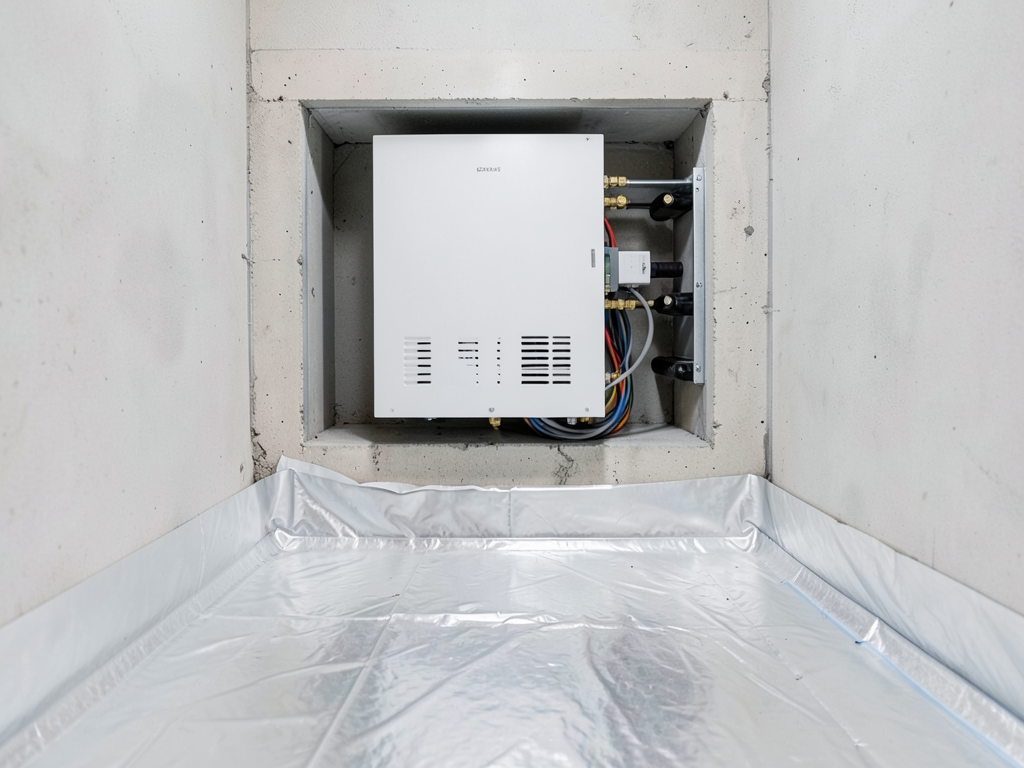
Vapor barrier installation follows industry standards. We apply 6-mil polyethylene sheeting to all exterior walls, sealing seams with vapor barrier tape. The barrier extends under flooring and behind door frames. Any penetrations for electrical or refrigerant lines receive special sealing.
Insulation installation matches Minnesota climate requirements. We use closed-cell spray foam or rigid foam board with minimum R-19 values. The insulation creates a continuous thermal envelope without gaps that could create condensation points.. Read more about How to Landscape Around Your AC Unit Without Killing Your Efficiency in Minnetonka.
Unit placement affects both performance and noise. Through-the-wall units mount 18-24 inches above floor level for proper air circulation. Split systems position evaporators away from vibration-sensitive areas. Condensers mount on south-facing walls with adequate clearance for snow removal.
- Heat Load Assessment
Measure space dimensions and calculate BTU requirements based on insulation and climate factors.
- Vapor Barrier Application
Install 6-mil polyethylene sheeting on all exterior surfaces with sealed seams.
- Insulation Installation
Apply minimum R-19 insulation to create continuous thermal envelope.
- Electrical Preparation
Install dedicated 115V or 230V circuit with proper GFCI protection.
- Unit Mounting
Position cooling unit for optimal air circulation and noise control.
- System Testing
Verify temperature, humidity, and condensate drainage operation.
Top Brands We Support
Wine Guardian systems offer commercial-grade reliability for serious collectors. These units feature digital thermostats, automatic defrost cycles, and low-vibration compressors. Wine Guardian provides 5-year warranties on most models.
WhisperKOOL units emphasize quiet operation and energy efficiency. Their split systems reduce interior noise to under 35 decibels. WhisperKOOL offers various sizes from 1,500 to 6,000 BTU capacities.
CellarPro manufactures units specifically for wine storage with precise humidity control. Their systems include charcoal filters to prevent odors and UV-resistant components. CellarPro units handle extreme temperature differentials common in Minnesota.
Breezaire units provide economical options for smaller cellars. These self-contained systems install quickly and maintain stable conditions. Breezaire offers 3-year warranties on most models.
Local Case Studies and Portfolio
A 2,500-bottle collection in Wayzata required a ducted Wine Guardian system. The home’s clay soil and high water table necessitated special vapor barrier techniques. We installed R-30 insulation and a dedicated 230V circuit to handle the 8,000 BTU load.
An Orono estate with a historic basement needed a through-the-wall system that preserved original stone walls. We mounted the unit above floor level and used flexible ductwork to distribute air evenly. The system maintains 56°F with 62% humidity year-round.
A modern Lake Minnetonka home required a ductless split system for a 1,000-bottle collection. We positioned the evaporator in a mechanical room and ran insulated lines through conditioned space. The condenser mounts on a concrete pad above the frost line.
Maintenance and Emergency Repair Services
Annual maintenance prevents most wine cellar cooling failures. We clean evaporator coils, check refrigerant levels, and test condensate drains. Minnesota’s seasonal changes stress cooling systems, making spring and fall service essential. Fast AC Service for North Loop Condos and Lofts.
Condensate drain maintenance prevents water damage. We clear algae buildup and verify proper slope. A clogged drain can overflow and damage flooring or wall panels. We install backup condensate pumps for added protection. Weak Airflow from Vents.
Refrigerant leaks require immediate attention. Low refrigerant reduces cooling capacity and can freeze evaporator coils. EPA regulations require certified technicians to handle refrigerant. We use electronic leak detectors to find small leaks before they cause system failure.
Electrical issues often cause cooling failures. We check capacitors, contactors, and control boards. Voltage fluctuations from Minnesota’s weather can damage sensitive electronics. Surge protectors protect expensive cooling units from power spikes.
Call (651) 588-9677 today to schedule your wine cellar cooling inspection. Early detection prevents costly wine damage and system replacement.
Frequently Asked Questions
What temperature should my wine cellar maintain?
Wine cellars need 55-57°F for optimal storage. Red wines tolerate slight variations better than whites. Consistent temperature matters more than exact degrees.
How much humidity does a wine cellar need?
Maintain 50-70% relative humidity. Too low dries corks and causes oxidation. Too high promotes mold growth on labels and walls.
Can I use my home’s air conditioning for wine storage?
No. Home AC systems cannot maintain the stable temperatures wine requires. They cycle on and off, causing temperature swings that damage wine.
How long do wine cellar cooling systems last?
Quality systems last 10-15 years with proper maintenance. Compressors typically fail first. Regular cleaning and annual service extend system life.
What permits are required for wine cellar cooling installation?
Minneapolis and Hennepin County require electrical permits for new circuits. Refrigeration work needs EPA certification. We handle all permit requirements as part of installation. Minneapolis Building Codes.
How much does wine cellar cooling installation cost?
Installation costs range from $3,500 to $15,000 depending on system size and complexity. Through-the-wall units cost less than ducted systems. Larger cellars need more capacity and insulation.
Don’t risk your wine collection to improper climate control. Call (651) 588-9677 now for a professional assessment. We serve Orono, Lake Minnetonka, and all Minneapolis suburbs with expert wine cellar cooling installation and maintenance.
{
“@context”: “https://schema.org”,
“@type”: “BlogPosting”,
“headline”: “Climate Control for Private Wine Cellars in Orono and Lake Minnetonka Estates”,
“description”: “Expert wine cellar cooling installation in Orono and Lake Minnetonka. R-19 insulation requirements, vapor barrier systems, and climate control for Minnesota wine collections.”,
“wordCount”: 1309,
“datePublished”: “2026-04-15T06:01:00.000Z”,
“dateModified”: “2026-04-15T06:01:00.000Z”,
“inLanguage”: “en-US”,
“mainEntityOfPage”: {
“@type”: “WebPage”,
“@id”: “https://allprohvacminneapolis.com”
},
“publisher”: {
“@type”: “LocalBusiness”,
“name”: “All Pro HVAC Minneapolis”,
“url”: “https://allprohvacminneapolis.com”
},
“author”: {
“@type”: “Organization”,
“name”: “All Pro HVAC Minneapolis”,
“url”: “https://allprohvacminneapolis.com”
},
“image”: {
“@type”: “ImageObject”,
“url”: “https://allprohvacminneapolis.com/wp-content/uploads/2026/03/climate-control-for-private-wine-cellars-in-orono-1.png”
}
}
{
“@context”: “https://schema.org”,
“@type”: “HVACBusiness”,
“name”: “All Pro HVAC Minneapolis”,
“url”: “https://allprohvacminneapolis.com”,
“address”: {
“@type”: “PostalAddress”,
“addressLocality”: “Minneapolis”
},
“areaServed”: {
“@type”: “City”,
“name”: “Minneapolis”
}
}
{
“@context”: “https://schema.org”,
“@type”: “FAQPage”,
“mainEntity”: [
{
“@type”: “Question”,
“name”: “What temperature should my wine cellar maintain?”,
“acceptedAnswer”: {
“@type”: “Answer”,
“text”: “Wine cellars need 55-57°F for optimal storage. Red wines tolerate slight variations better than whites. Consistent temperature matters more than exact degrees.”
}
},
{
“@type”: “Question”,
“name”: “How much humidity does a wine cellar need?”,
“acceptedAnswer”: {
“@type”: “Answer”,
“text”: “Maintain 50-70% relative humidity. Too low dries corks and causes oxidation. Too high promotes mold growth on labels and walls.”
}
},
{
“@type”: “Question”,
“name”: “Can I use my home’s air conditioning for wine storage?”,
“acceptedAnswer”: {
“@type”: “Answer”,
“text”: “No. Home AC systems cannot maintain the stable temperatures wine requires. They cycle on and off, causing temperature swings that damage wine.”
}
},
{
“@type”: “Question”,
“name”: “How long do wine cellar cooling systems last?”,
“acceptedAnswer”: {
“@type”: “Answer”,
“text”: “Quality systems last 10-15 years with proper maintenance. Compressors typically fail first. Regular cleaning and annual service extend system life.”
}
},
{
“@type”: “Question”,
“name”: “What permits are required for wine cellar cooling installation?”,
“acceptedAnswer”: {
“@type”: “Answer”,
“text”: “Minneapolis and Hennepin County require electrical permits for new circuits. Refrigeration work needs EPA certification. We handle all permit requirements as part of installation. Minneapolis Building Codes.”
}
},
{
“@type”: “Question”,
“name”: “How much does wine cellar cooling installation cost?”,
“acceptedAnswer”: {
“@type”: “Answer”,
“text”: “Installation costs range from $3,500 to $15,000 depending on system size and complexity. Through-the-wall units cost less than ducted systems. Larger cellars need more capacity and insulation.”
}
}
]
}
{
“@context”: “https://schema.org”,
“@type”: “HowTo”,
“name”: “Wine Cellar Cooling Installation Steps”,
“step”: [
{
“@type”: “HowToStep”,
“position”: 1,
“name”: “Heat Load Assessment”,
“text”: “Measure space dimensions and calculate BTU requirements based on insulation and climate factors.”
},
{
“@type”: “HowToStep”,
“position”: 2,
“name”: “Vapor Barrier Application”,
“text”: “Install 6-mil polyethylene sheeting on all exterior surfaces with sealed seams.”
},
{
“@type”: “HowToStep”,
“position”: 3,
“name”: “Insulation Installation”,
“text”: “Apply minimum R-19 insulation to create continuous thermal envelope.”
},
{
“@type”: “HowToStep”,
“position”: 4,
“name”: “Electrical Preparation”,
“text”: “Install dedicated 115V or 230V circuit with proper GFCI protection.”
},
{
“@type”: “HowToStep”,
“position”: 5,
“name”: “Unit Mounting”,
“text”: “Position cooling unit for optimal air circulation and noise control.”
},
{
“@type”: “HowToStep”,
“position”: 6,
“name”: “System Testing”,
“text”: “Verify temperature, humidity, and condensate drainage operation.”
}
],
“image”: “https://allprohvacminneapolis.com/wp-content/uploads/2026/03/climate-control-for-private-wine-cellars-in-orono-1.png”
}
{
“@context”: “https://schema.org”,
“@type”: “BreadcrumbList”,
“itemListElement”: [
{
“@type”: “ListItem”,
“position”: 1,
“name”: “Home”,
“item”: “https://allprohvacminneapolis.com”
},
{
“@type”: “ListItem”,
“position”: 2,
“name”: “Blog”,
“item”: “https://allprohvacminneapolis.com/blog”
},
{
“@type”: “ListItem”,
“position”: 3,
“name”: “Climate Control for Private Wine Cellars in Orono and Lake Minnetonka Estates”
}
]
}
{
“@context”: “https://schema.org”,
“@type”: “Service”,
“serviceType”: “HVAC”,
“provider”: {
“@type”: “LocalBusiness”,
“name”: “All Pro HVAC Minneapolis”,
“url”: “https://allprohvacminneapolis.com”
},
“areaServed”: {
“@type”: “City”,
“name”: “Minneapolis”
},
“description”: “Expert wine cellar cooling installation in Orono and Lake Minnetonka. R-19 insulation requirements, vapor barrier systems, and climate control for Minnesota wine collections.”
}