
Choosing Between 80% and 96% Efficiency Furnaces for Your First Minneapolis Home
Minneapolis winters are brutal and your furnace choice matters more here than in most places. The difference between an 80% and 96% efficiency furnace affects not just your monthly gas bill but also how your home handles our -11°F design temperature winters. Most first-time homeowners focus only on upfront cost but miss the long-term savings and installation requirements that make this decision critical for Minnesota homes. How Much a New High Efficiency Furnace Really Costs in Minneapolis.
80% furnaces send 20% of your heat up the chimney while 96% furnaces capture almost all that energy for your home. In Minneapolis where heating season runs from October through April, that 16% efficiency gap translates to hundreds of dollars annually. The real question is whether the higher upfront cost of a 96% unit makes sense for your specific home and budget. ENERGY STAR furnace efficiency standards.
Understanding the AFUE Rating: What the Numbers Actually Mean
AFUE stands for Annual Fuel Utilization Efficiency and represents how much of your fuel becomes usable heat. An 80% furnace converts 80% of gas to heat while 20% escapes through the flue. A 96% furnace wastes only 4% of your fuel. In Minneapolis where gas rates are among the highest in the Midwest, this difference hits your wallet hard.. Read more about Converting an Old Gravity Furnace into Modern Forced Air in Hamline-Midway.
Beyond efficiency, the two furnace types operate differently. 80% units use a single heat exchanger and require metal venting through a chimney. 96% furnaces add a secondary heat exchanger that captures heat from exhaust gases, producing condensation that needs drainage. This design change means 96% units cannot use existing chimneys and require new PVC venting systems.. Read more about Why Variable Speed Furnaces Are the Best Choice for Large Woodbury Homes.
Heat output matters in Minneapolis. A 96% furnace typically provides more consistent temperatures because it runs longer at lower speeds. This means fewer cold spots and better humidity control during our dry winter months. The variable-speed blower in most 96% units also runs more quietly than the single-speed blowers in 80% furnaces.
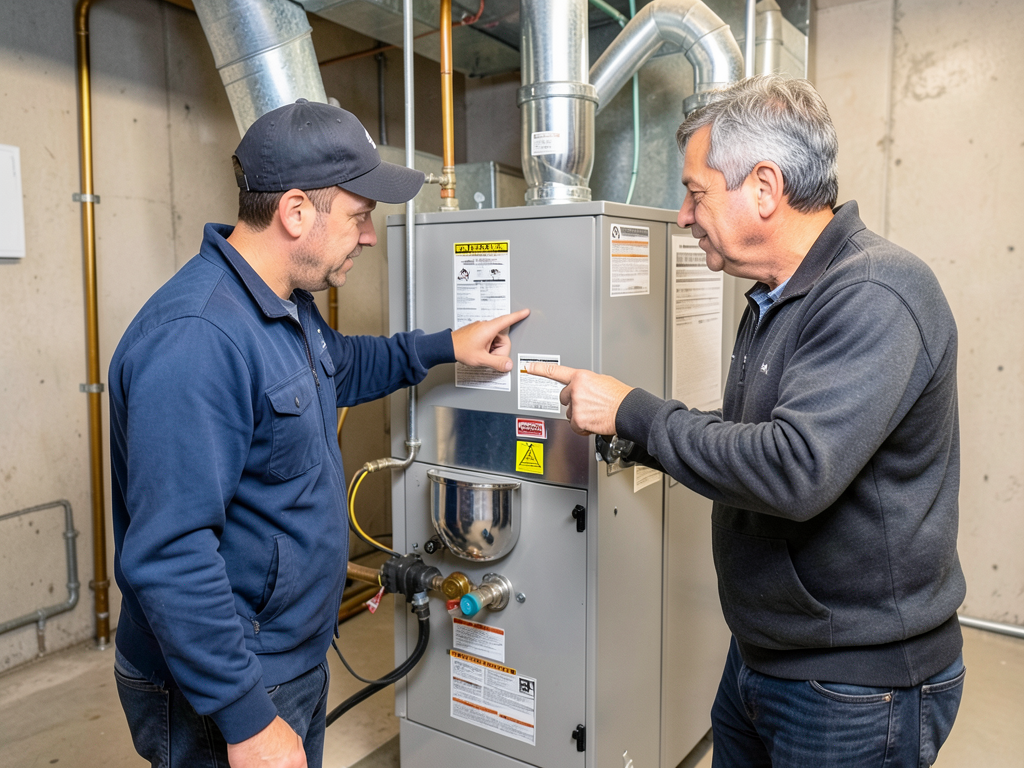
Image description: Technician pointing to secondary heat exchanger components in a 96% efficiency furnace during installation in a Minneapolis basement. Shows the additional stainless steel chamber that captures exhaust heat.
Key Technical Differences: Single-Stage vs. Two-Stage Heating
The valve controlling gas flow represents the biggest operational difference between these furnace categories. 80% furnaces typically use single-stage valves that are either fully on or off. 96% furnaces often feature two-stage or modulating valves that adjust gas flow based on temperature needs.
Two-stage operation means your furnace can run at 65% capacity for mild days and only kick to full power during extreme cold snaps. In Minneapolis where temperatures can swing 40 degrees in a single day, this flexibility provides better comfort and efficiency. The furnace learns your home’s patterns and adjusts automatically.
Variable speed blowers in 96% units also make a huge difference. These motors can run at any speed between 0% and 100%, adjusting airflow to match heating demand. This means quieter operation, better air filtration, and more even temperatures throughout your home. Single-speed blowers in 80% units cannot make these adjustments. Weak Airflow from Vents.
Combustion air requirements differ significantly. 80% furnaces pull air from your home for combustion, which can create negative pressure and backdrafting issues. 96% furnaces use sealed combustion chambers that draw air directly from outside through dedicated PVC pipes. This design prevents indoor air quality problems and improves safety.
The Installation Factor: Why 96% Furnaces Require New Venting
Installing a 96% furnace in an existing Minneapolis home often means major changes to your venting system. The secondary heat exchanger cools exhaust gases below 140°F, causing water vapor to condense. This acidic condensate requires special handling through dedicated drain lines and cannot travel up existing metal chimneys.
Most Minneapolis homes built before 2000 have traditional metal chimneys designed for 80% furnace exhaust temperatures around 350°F. PVC venting for 96% units must terminate at least 12 inches above expected snow levels and maintain specific clearances from windows and doors. Minneapolis building code requires these terminations to be frost-proof and properly supported.
Finished basements create additional challenges. Running new PVC venting through finished spaces requires careful planning to avoid cutting through structural elements or creating unsightly runs. Some Minneapolis homeowners choose to relocate their furnaces to utility rooms or garages to simplify venting requirements.
Condensate disposal presents another consideration. The acidic water from 96% furnaces needs neutralization before entering your plumbing system. Minneapolis code requires condensate neutralizers for units over 225,000 BTU. This adds installation cost but protects your home’s plumbing from corrosion damage.
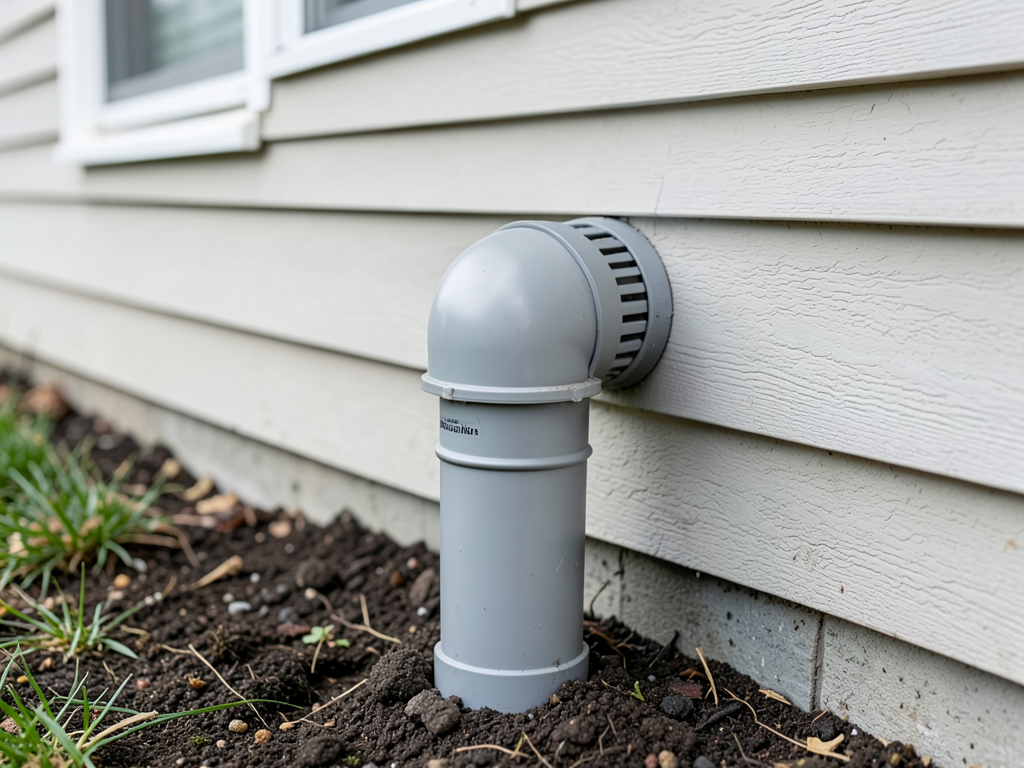
Image description: Close-up of PVC vent termination on a Minneapolis home exterior showing proper frost-resistant cap and clearance from ground level. Demonstrates code-compliant installation for high-efficiency furnace venting.
Cost Analysis: Upfront Investment vs. Long-Term Savings in Minnesota
The price gap between 80% and 96% furnaces varies based on your home’s existing infrastructure. In Minneapolis where labor rates run $120-180 per hour, installation costs for 96% units typically run $1,500-3,000 higher than 80% units. This premium covers new venting, condensate lines, and often upgraded electrical connections.
Annual operating costs tell a different story. A typical Minneapolis home uses 75-100 million BTUs for heating annually. At current CenterPoint Energy rates around $0.85 per therm, an 80% furnace costs approximately $850-1,100 per year while a 96% unit costs $710-950. That’s $140-150 in annual savings. CenterPoint Energy rebates.
Minneapolis heating degree days average 7,500 annually, one of the highest in the continental US. This extreme heating load means efficiency improvements pay back faster here than in warmer climates. Most 96% furnaces recover their additional cost in 5-7 years through energy savings alone. Switching to a Cold Climate Heat Pump in Minnesota (Is It Worth It?).
Maintenance costs also differ. 96% furnaces require annual condensate line cleaning and neutralizer cartridge replacement. These services add $100-150 annually but prevent costly freeze-ups during extreme cold. 80% units need less frequent maintenance but may require chimney liner replacement every 10-15 years at $1,500-2,500. Fast AC Service for North Loop Condos and Lofts.
- Determine Your Annual Gas Usage
Check last year’s gas bills or estimate based on home size. Minneapolis homes average 75-100 million BTUs annually.
- Calculate Current Costs
Multiply usage by current gas rates. 80% furnaces waste 20% of purchased fuel.
- Estimate 96% Savings
Multiply current costs by 0.16 to find potential annual savings. This represents the efficiency difference.
- Factor Installation Premium
Add $1,500-3,000 for venting changes if switching from 80% to 96%.
- Calculate Payback
Divide installation premium by annual savings to find years to break even.
Local Incentives: Minneapolis Utility Rebates and Federal Tax Credits
Minneapolis homeowners can significantly reduce the cost premium for 96% furnaces through utility rebates. CenterPoint Energy offers $200-400 rebates for furnaces with 96% AFUE or higher. Xcel Energy provides similar incentives when replacing electric heating systems with high-efficiency gas furnaces.
The federal 25C tax credit for 2026 allows homeowners to claim 30% of installation costs up to $600 for qualified high-efficiency furnaces. This credit applies to both equipment and labor, making the upgrade more affordable. Minneapolis residents can combine utility rebates with the tax credit for maximum savings.
Minneapolis Energy Efficiency Program (MEEP) offers additional incentives for homes in certain neighborhoods. Properties in older Minneapolis districts may qualify for enhanced rebates when upgrading from 80% to 96% efficiency. These programs target energy conservation in areas with aging heating infrastructure.
Local HVAC contractors often have access to manufacturer rebates that stack with utility incentives. Lennox, Carrier, and Bryant frequently offer seasonal promotions that can add $100-300 to your savings. These rebates change quarterly, so timing your purchase can maximize returns.
Financing options make high-efficiency upgrades accessible. CenterPoint Energy partners with local lenders to offer 0% interest loans for energy-efficient improvements. Minneapolis residents can finance up to $10,000 over 5 years, spreading the upfront cost while still enjoying monthly energy savings.
The Verdict: When to Choose 80% vs. 96% for Your Minneapolis Home
Choose an 80% furnace if your Minneapolis home has a properly lined chimney in good condition and you plan to stay less than 5 years. The lower upfront cost makes sense for short-term ownership, and 80% units still provide reliable heat in our climate. This option works best for homes under 2,000 square feet with minimal heating demands.
96% furnaces make sense for most Minneapolis homeowners staying 5+ years. The extreme heating season means efficiency savings accumulate quickly. Choose 96% if your home needs new venting anyway, you want better humidity control, or you value quieter operation. These units also increase home resale value, a significant factor in Minneapolis’s competitive real estate market.
Consider your home’s age and construction. Homes built after 2010 likely have proper venting for 96% units already. Older Minneapolis homes may need extensive modifications. The cost of chimney relining or new venting runs $1,500-3,000, which can make 96% the better choice even with higher equipment costs.
Your comfort preferences matter too. 96% furnaces provide more consistent temperatures and better air quality through longer run times and better filtration. If anyone in your home has allergies or respiratory issues, the improved air circulation of a 96% unit provides real health benefits during our long winters.
Climate change considerations influence many Minneapolis homeowners. 96% furnaces produce fewer greenhouse gas emissions, reducing your carbon footprint. While this environmental benefit doesn’t affect your immediate comfort, it matters to many first-time homeowners concerned about sustainability.
Image description: Technician performing combustion analysis test on a newly installed 96% efficiency furnace in a Minneapolis home. Shows digital combustion analyzer connected to flue to verify proper operation and efficiency.
Making Your Decision: Next Steps for Minneapolis Homeowners
Start with a professional load calculation to determine your actual heating needs. Many Minneapolis homes have oversized furnaces that waste energy. A Manual J calculation considers your home’s insulation, windows, and orientation to recommend the right size. This step prevents overspending on capacity you don’t need.
Schedule a venting inspection before choosing equipment. A qualified HVAC contractor can assess your existing chimney and determine if it can handle a 96% furnace or if modifications are needed. This inspection costs $100-200 but prevents installation surprises later.
Check current utility rebates before making your final decision. Programs change quarterly and may offer limited-time bonuses. CenterPoint Energy’s website lists current incentives, and local contractors know about unadvertised promotions that could sway your choice.
Consider your home’s future. If you’re planning additions or finishing your basement, factor those changes into your furnace sizing. An undersized furnace in five years means expensive replacement sooner than expected.
Ask about warranty coverage differences. 96% furnaces often come with longer parts warranties, sometimes 10 years versus 5 years for 80% units. This extended coverage can offset the higher initial investment over time.
Frequently Asked Questions
Can I keep my existing chimney with a 96% furnace?
No. The acidic condensate from 96% furnaces will destroy metal chimneys designed for 80% units. You need new PVC venting that terminates at least 12 inches above expected snow levels.
How much can I really save with a 96% furnace in Minneapolis?
Most Minneapolis homeowners save $150-200 annually on gas bills. With our 7,500+ heating degree days, the efficiency premium pays back in 5-7 years through energy savings alone.
Do 96% furnaces work during extreme cold snaps?
Yes. Modern 96% furnaces are designed for Minneapolis winters and perform reliably at -20°F. The sealed combustion design actually works better in extreme cold than 80% units that pull air from your home.
What about noise levels between the two options?
96% furnaces with variable-speed blowers operate at 50-60 decibels, similar to a refrigerator. 80% units with single-speed blowers run at 65-70 decibels, comparable to normal conversation. The difference matters in open floor plans.
Should I wait for newer technology?
96% efficiency represents current best practice for gas furnaces. Cold climate heat pumps are emerging as alternatives, but for pure gas heating in Minneapolis, 96% remains the most efficient option available today.
Ready to make the right choice for your Minneapolis home? Call (651) 588-9677 today to schedule your free consultation and learn which furnace option makes sense for your specific situation. Our NATE-certified technicians will assess your home’s needs and help you understand all available rebates before you decide.
You may also find this helpful. Protecting Your Hardwood Floors from Winter Cracks with Precise Humidity Control.
You may also find this helpful. The Hidden Dangers of HVAC Rental Contracts and Equipment Leasing in Minnesota.
{
“@context”: “https://schema.org”,
“@type”: “BlogPosting”,
“headline”: “Choosing Between 80% and 96% Efficiency Furnaces for Your First Minneapolis Home”,
“description”: “Minneapolis homeowners need to understand the real differences between 80% and 96% furnaces. Learn about installation costs, utility rebates, and performance in our extreme winters.”,
“wordCount”: 2040,
“datePublished”: “2026-06-12T07:09:00.000Z”,
“dateModified”: “2026-06-12T07:09:00.000Z”,
“inLanguage”: “en-US”,
“mainEntityOfPage”: {
“@type”: “WebPage”,
“@id”: “https://allprohvacminneapolis.com”
},
“publisher”: {
“@type”: “LocalBusiness”,
“name”: “All Pro HVAC Minneapolis”,
“url”: “https://allprohvacminneapolis.com”
},
“author”: {
“@type”: “Organization”,
“name”: “All Pro HVAC Minneapolis”,
“url”: “https://allprohvacminneapolis.com”
},
“image”: {
“@type”: “ImageObject”,
“url”: “https://allprohvacminneapolis.com/wp-content/uploads/2026/03/choosing-between-80-and-96-efficiency-furnaces-for-1.png”
}
}
{
“@context”: “https://schema.org”,
“@type”: “HVACBusiness”,
“name”: “All Pro HVAC Minneapolis”,
“url”: “https://allprohvacminneapolis.com”,
“address”: {
“@type”: “PostalAddress”,
“addressLocality”: “Minneapolis”
},
“areaServed”: {
“@type”: “City”,
“name”: “Minneapolis”
}
}
{
“@context”: “https://schema.org”,
“@type”: “FAQPage”,
“mainEntity”: [
{
“@type”: “Question”,
“name”: “Can I keep my existing chimney with a 96% furnace?”,
“acceptedAnswer”: {
“@type”: “Answer”,
“text”: “No. The acidic condensate from 96% furnaces will destroy metal chimneys designed for 80% units. You need new PVC venting that terminates at least 12 inches above expected snow levels.”
}
},
{
“@type”: “Question”,
“name”: “How much can I really save with a 96% furnace in Minneapolis?”,
“acceptedAnswer”: {
“@type”: “Answer”,
“text”: “Most Minneapolis homeowners save $150-200 annually on gas bills. With our 7,500+ heating degree days, the efficiency premium pays back in 5-7 years through energy savings alone.”
}
},
{
“@type”: “Question”,
“name”: “Do 96% furnaces work during extreme cold snaps?”,
“acceptedAnswer”: {
“@type”: “Answer”,
“text”: “Yes. Modern 96% furnaces are designed for Minneapolis winters and perform reliably at -20°F. The sealed combustion design actually works better in extreme cold than 80% units that pull air from your home.”
}
},
{
“@type”: “Question”,
“name”: “What about noise levels between the two options?”,
“acceptedAnswer”: {
“@type”: “Answer”,
“text”: “96% furnaces with variable-speed blowers operate at 50-60 decibels, similar to a refrigerator. 80% units with single-speed blowers run at 65-70 decibels, comparable to normal conversation. The difference matters in open floor plans.”
}
},
{
“@type”: “Question”,
“name”: “Should I wait for newer technology?”,
“acceptedAnswer”: {
“@type”: “Answer”,
“text”: “96% efficiency represents current best practice for gas furnaces. Cold climate heat pumps are emerging as alternatives, but for pure gas heating in Minneapolis, 96% remains the most efficient option available today.”
}
}
]
}
{
“@context”: “https://schema.org”,
“@type”: “HowTo”,
“name”: “Calculating Your Payback Period”,
“step”: [
{
“@type”: “HowToStep”,
“position”: 1,
“name”: “Determine Your Annual Gas Usage”,
“text”: “Check last year’s gas bills or estimate based on home size. Minneapolis homes average 75-100 million BTUs annually.”
},
{
“@type”: “HowToStep”,
“position”: 2,
“name”: “Calculate Current Costs”,
“text”: “Multiply usage by current gas rates. 80% furnaces waste 20% of purchased fuel.”
},
{
“@type”: “HowToStep”,
“position”: 3,
“name”: “Estimate 96% Savings”,
“text”: “Multiply current costs by 0.16 to find potential annual savings. This represents the efficiency difference.”
},
{
“@type”: “HowToStep”,
“position”: 4,
“name”: “Factor Installation Premium”,
“text”: “Add $1,500-3,000 for venting changes if switching from 80% to 96%.”
},
{
“@type”: “HowToStep”,
“position”: 5,
“name”: “Calculate Payback”,
“text”: “Divide installation premium by annual savings to find years to break even.”
}
],
“image”: “https://allprohvacminneapolis.com/wp-content/uploads/2026/03/choosing-between-80-and-96-efficiency-furnaces-for-1.png”
}
{
“@context”: “https://schema.org”,
“@type”: “BreadcrumbList”,
“itemListElement”: [
{
“@type”: “ListItem”,
“position”: 1,
“name”: “Home”,
“item”: “https://allprohvacminneapolis.com”
},
{
“@type”: “ListItem”,
“position”: 2,
“name”: “Blog”,
“item”: “https://allprohvacminneapolis.com/blog”
},
{
“@type”: “ListItem”,
“position”: 3,
“name”: “Choosing Between 80% and 96% Efficiency Furnaces for Your First Minneapolis Home”
}
]
}
{
“@context”: “https://schema.org”,
“@type”: “Service”,
“serviceType”: “HVAC”,
“provider”: {
“@type”: “LocalBusiness”,
“name”: “All Pro HVAC Minneapolis”,
“url”: “https://allprohvacminneapolis.com”
},
“areaServed”: {
“@type”: “City”,
“name”: “Minneapolis”
},
“description”: “Minneapolis homeowners need to understand the real differences between 80% and 96% furnaces. Learn about installation costs, utility rebates, and performance in our extreme winters.”
}