
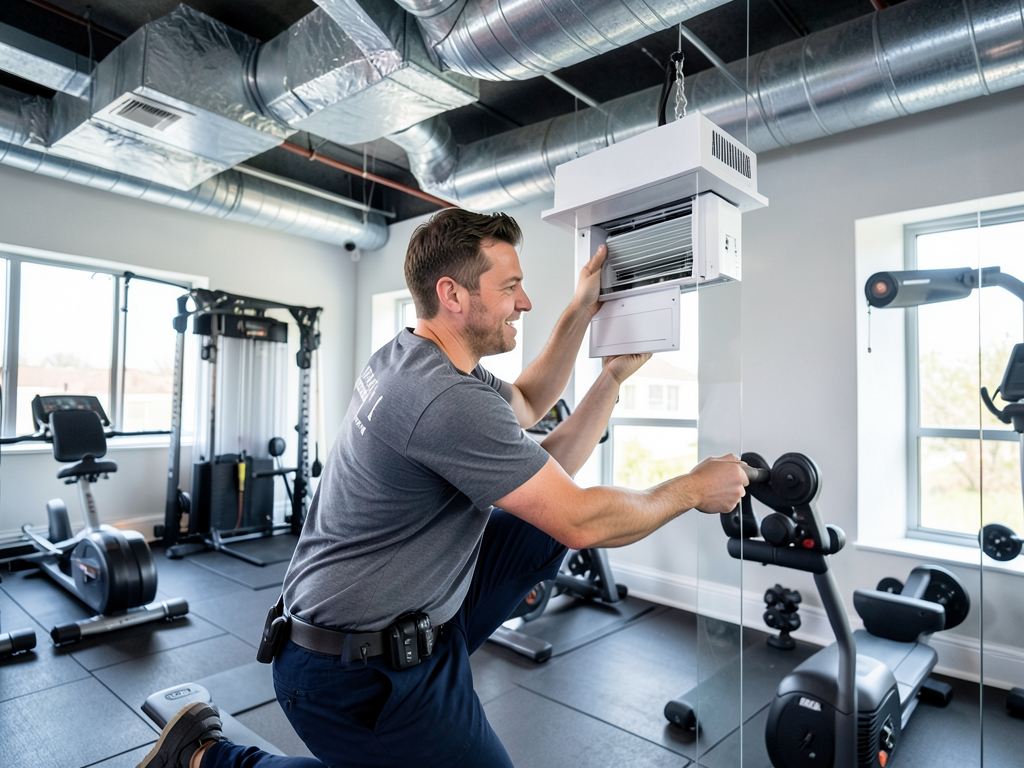
Building a Home Gym in Orono? Here’s How to Keep It Comfortable Year-Round
The Twin Cities climate makes home gym HVAC a unique challenge. Orono homeowners need systems that handle both -20°F winter mornings and 90°F humid summer workouts. Standard residential HVAC often fails in these specialized spaces because they lack proper ventilation and humidity control. This guide covers the best solutions for your home gym, yoga studio, or garage conversion in Orono. Switching to a Cold Climate Heat Pump in Minnesota (Is It Worth It?).
Why Standard HVAC Often Fails in Workout Spaces
Home gyms generate intense heat and moisture from exercise. A typical bedroom HVAC system wasn’t designed for continuous high-output operation. When you’re doing HIIT workouts or hot yoga, you need targeted cooling that responds quickly to temperature spikes. Plus, Minnesota’s extreme seasonal swings mean your system must perform in both heating and cooling modes without compromise.
Top 3 HVAC Solutions for Home Gyms in Orono
Choosing the right system depends on your space layout and usage patterns. Here are the three most effective options for Orono homes:
- Assess Your Space
Measure the room dimensions and calculate the BTU requirements based on square footage and ceiling height. Consider factors like insulation quality and window exposure.
- Select the Right System
Choose between ductless mini-splits, extended ductwork, or portable units based on your budget and performance needs.
- Plan for Ventilation
Install proper exhaust fans or HRV systems to handle moisture and maintain air quality during intense workouts.
The Minneapolis Factor: Managing Extreme Temperature Swings
Orono experiences some of the most dramatic temperature swings in the continental US. Your home gym HVAC must handle these extremes without failure. Cold-climate heat pumps with Hyper-Heat technology work effectively down to -15°F, making them ideal for Minnesota garages and basements. These systems maintain consistent performance when traditional units struggle.
Humidity and Air Quality: More Than Just Cooling
Workout spaces create unique air quality challenges. Sweat increases humidity levels rapidly, and rubber flooring can off-gas VOCs. You need more than just temperature control. A properly sized dehumidifier maintains 40-60% relative humidity, preventing mold growth and protecting your equipment. MERV 13 filtration captures airborne particles from exercise equipment and flooring materials.
Cost Estimate and ROI for Minneapolis Homeowners
Investing in proper home gym HVAC pays dividends beyond comfort. Quality systems increase your home’s value and reduce energy costs through zoned operation. While initial costs range from $3,500 to $8,000 depending on the solution, you’ll see immediate benefits in workout comfort and long-term savings on utility bills.
| System Type | Initial Cost Range | Annual Energy Savings | Best For |
|---|---|---|---|
| Ductless Mini-Split | $3,500 – $5,500 | $150 – $250 | Garage conversions, separate rooms |
| Extended Ductwork | $4,000 – $7,000 | $100 – $200 | Basement gyms, adjacent spaces |
| Portable Units | $500 – $1,500 | $50 – $100 | Temporary setups, small spaces |
Installation Considerations for Orono Homes
Orono’s housing stock includes everything from lakefront properties to suburban developments. Each presents unique installation challenges. Older homes may need electrical upgrades to support modern HVAC equipment. Lakefront properties require corrosion-resistant materials due to higher humidity levels. Your installation should comply with Minneapolis Mechanical Code Section 302, which mandates proper ventilation for exercise spaces. Minneapolis Mechanical Code Section 302.
Energy Efficiency and Rebates
Minnesota offers substantial rebates for high-efficiency HVAC installations. Xcel Energy provides up to $400 for qualifying heat pump systems. CenterPoint Energy offers similar incentives for natural gas-powered solutions. These rebates can offset 15-20% of your installation costs while reducing your carbon footprint. Xcel Energy HVAC Rebates.
Maintenance Requirements
Regular maintenance keeps your home gym HVAC running efficiently. Clean or replace filters every 60-90 days during heavy use. Schedule professional maintenance twice yearly to check refrigerant levels, clean coils, and verify proper operation. This prevents the most common failure point: reduced cooling capacity during peak summer months. Weak Airflow from Vents.
Smart Controls for Your Workout Space
Modern HVAC systems integrate with smart home technology. Pre-cool your gym before workouts using smartphone apps. Set humidity triggers that activate dehumidification automatically. Zone controls let you maintain different temperatures in your gym versus the rest of your home, optimizing comfort and efficiency. How Much a New High Efficiency Furnace Really Costs in Minneapolis.
Common Mistakes to Avoid
Many homeowners underestimate their home gym HVAC needs. Avoid these pitfalls: undersizing the system, neglecting ventilation requirements, ignoring humidity control, and choosing portable units for permanent installations. These mistakes lead to uncomfortable workouts and potential equipment damage.
When to Call a Professional
DIY HVAC installation might seem cost-effective, but professional installation ensures code compliance and optimal performance. Call an expert when you need: proper load calculations, electrical work, refrigerant handling, or ventilation system design. Professional installation also maintains manufacturer warranties.
Ready to Upgrade Your Home Gym Comfort?
Don’t let Minnesota’s extreme weather limit your workout routine. The right HVAC system transforms your home gym from a seasonal space to a year-round fitness sanctuary. Call (651) 588-9677 today to schedule your free consultation. We’ll assess your space, calculate your needs, and recommend the perfect solution for your Orono home gym.
Frequently Asked Questions
How much does it cost to add HVAC to a home gym?
Costs typically range from $3,500 to $8,000 depending on the system type, space size, and installation complexity. Ductless mini-splits offer the best balance of performance and value for most home gyms.
Can I use a portable AC unit for my home gym?
Portable units work for temporary or very small spaces but lack the efficiency and performance of permanent systems. They also create noise and require window venting, which may not be practical in all spaces.
What size HVAC system do I need for a home gym?
Most home gyms require 12,000 to 24,000 BTUs, but this varies based on room dimensions, insulation, and usage intensity. A professional load calculation ensures proper sizing for optimal performance.
How often should I maintain my home gym HVAC system?
Change filters every 60-90 days and schedule professional maintenance twice yearly. More frequent maintenance may be needed if you use your gym heavily or have pets that shed.
Will adding HVAC increase my home’s value?
Yes. Quality HVAC improvements typically return 65-80% of their cost in home value while providing immediate comfort benefits and energy savings. For more information, visit ASHRAE HVAC Standards.
{
“@context”: “https://schema.org”,
“@type”: “BlogPosting”,
“headline”: “Adding HVAC to a New Home Gym or Yoga Studio in Orono”,
“description”: “Expert HVAC solutions for Orono home gyms facing Minnesota’s extreme temperatures. Learn about heat pumps, ventilation, and humidity control for year-round comfort.”,
“wordCount”: 1048,
“datePublished”: “2026-06-14T13:47:00.000Z”,
“dateModified”: “2026-06-14T13:47:00.000Z”,
“inLanguage”: “en-US”,
“mainEntityOfPage”: {
“@type”: “WebPage”,
“@id”: “https://allprohvacminneapolis.com”
},
“publisher”: {
“@type”: “LocalBusiness”,
“name”: “All Pro HVAC Minneapolis”,
“url”: “https://allprohvacminneapolis.com”
},
“author”: {
“@type”: “Organization”,
“name”: “All Pro HVAC Minneapolis”,
“url”: “https://allprohvacminneapolis.com”
},
“image”: {
“@type”: “ImageObject”,
“url”: “https://allprohvacminneapolis.com/wp-content/uploads/2026/03/adding-hvac-to-a-new-home-gym-or-yoga-studio-in-or-1.png”
}
}
{
“@context”: “https://schema.org”,
“@type”: “HVACBusiness”,
“name”: “All Pro HVAC Minneapolis”,
“url”: “https://allprohvacminneapolis.com”,
“address”: {
“@type”: “PostalAddress”,
“addressLocality”: “Minneapolis”
},
“areaServed”: {
“@type”: “City”,
“name”: “Minneapolis”
}
}
{
“@context”: “https://schema.org”,
“@type”: “FAQPage”,
“mainEntity”: [
{
“@type”: “Question”,
“name”: “Ready to Upgrade Your Home Gym Comfort?”,
“acceptedAnswer”: {
“@type”: “Answer”,
“text”: “Don’t let Minnesota’s extreme weather limit your workout routine. The right HVAC system transforms your home gym from a seasonal space to a year-round fitness sanctuary. Call (651) 588-9677 today to schedule your free consultation. We’ll assess your space, calculate your needs, and recommend the perfect solution for your Orono home gym.”
}
},
{
“@type”: “Question”,
“name”: “How much does it cost to add HVAC to a home gym?”,
“acceptedAnswer”: {
“@type”: “Answer”,
“text”: “Costs typically range from $3,500 to $8,000 depending on the system type, space size, and installation complexity. Ductless mini-splits offer the best balance of performance and value for most home gyms.”
}
},
{
“@type”: “Question”,
“name”: “Can I use a portable AC unit for my home gym?”,
“acceptedAnswer”: {
“@type”: “Answer”,
“text”: “Portable units work for temporary or very small spaces but lack the efficiency and performance of permanent systems. They also create noise and require window venting, which may not be practical in all spaces.”
}
},
{
“@type”: “Question”,
“name”: “What size HVAC system do I need for a home gym?”,
“acceptedAnswer”: {
“@type”: “Answer”,
“text”: “Most home gyms require 12,000 to 24,000 BTUs, but this varies based on room dimensions, insulation, and usage intensity. A professional load calculation ensures proper sizing for optimal performance.”
}
},
{
“@type”: “Question”,
“name”: “How often should I maintain my home gym HVAC system?”,
“acceptedAnswer”: {
“@type”: “Answer”,
“text”: “Change filters every 60-90 days and schedule professional maintenance twice yearly. More frequent maintenance may be needed if you use your gym heavily or have pets that shed.”
}
},
{
“@type”: “Question”,
“name”: “Will adding HVAC increase my home’s value?”,
“acceptedAnswer”: {
“@type”: “Answer”,
“text”: “Yes. Quality HVAC improvements typically return 65-80% of their cost in home value while providing immediate comfort benefits and energy savings. For more information, visit ASHRAE HVAC Standards.”
}
}
]
}
{
“@context”: “https://schema.org”,
“@type”: “HowTo”,
“name”: “Choosing Home Gym HVAC”,
“step”: [
{
“@type”: “HowToStep”,
“position”: 1,
“name”: “Assess Your Space”,
“text”: “Measure the room dimensions and calculate the BTU requirements based on square footage and ceiling height. Consider factors like insulation quality and window exposure.”
},
{
“@type”: “HowToStep”,
“position”: 2,
“name”: “Select the Right System”,
“text”: “Choose between ductless mini-splits, extended ductwork, or portable units based on your budget and performance needs.”
},
{
“@type”: “HowToStep”,
“position”: 3,
“name”: “Plan for Ventilation”,
“text”: “Install proper exhaust fans or HRV systems to handle moisture and maintain air quality during intense workouts.”
}
],
“image”: “https://allprohvacminneapolis.com/wp-content/uploads/2026/03/adding-hvac-to-a-new-home-gym-or-yoga-studio-in-or-1.png”
}
{
“@context”: “https://schema.org”,
“@type”: “BreadcrumbList”,
“itemListElement”: [
{
“@type”: “ListItem”,
“position”: 1,
“name”: “Home”,
“item”: “https://allprohvacminneapolis.com”
},
{
“@type”: “ListItem”,
“position”: 2,
“name”: “Blog”,
“item”: “https://allprohvacminneapolis.com/blog”
},
{
“@type”: “ListItem”,
“position”: 3,
“name”: “Adding HVAC to a New Home Gym or Yoga Studio in Orono”
}
]
}
{
“@context”: “https://schema.org”,
“@type”: “Service”,
“serviceType”: “HVAC”,
“provider”: {
“@type”: “LocalBusiness”,
“name”: “All Pro HVAC Minneapolis”,
“url”: “https://allprohvacminneapolis.com”
},
“areaServed”: {
“@type”: “City”,
“name”: “Minneapolis”
},
“description”: “Expert HVAC solutions for Orono home gyms facing Minnesota’s extreme temperatures. Learn about heat pumps, ventilation, and humidity control for year-round comfort.”
}